What is a cease and desist notice?
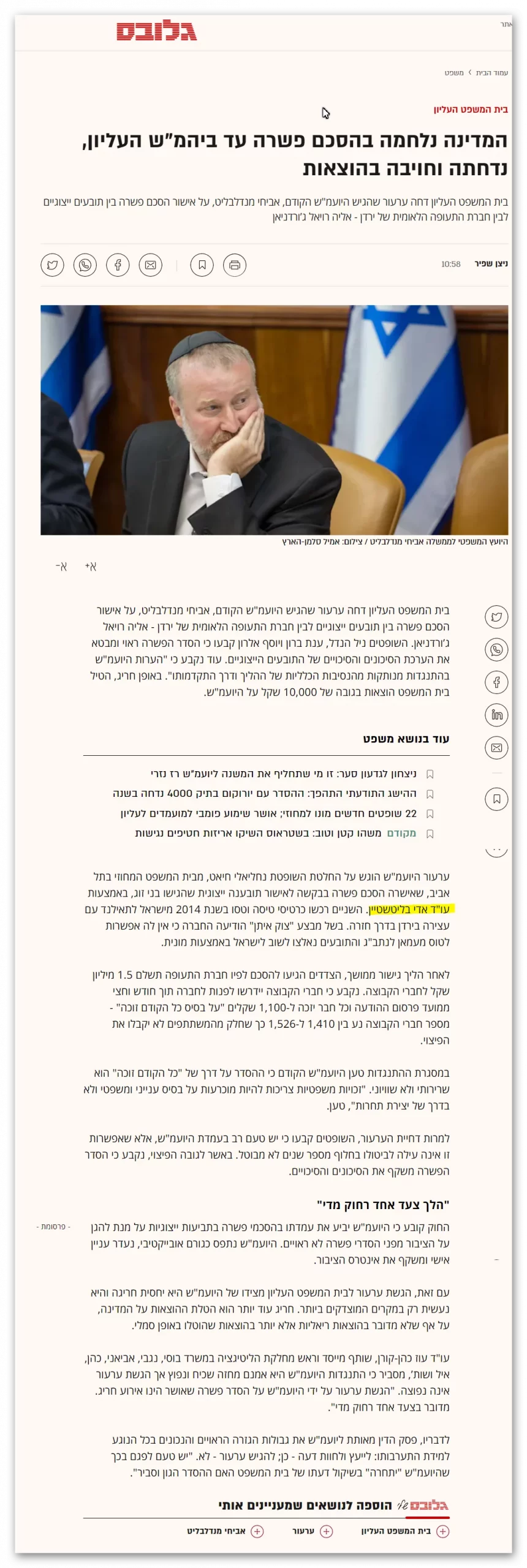
A cease and desist notice is a special procedure stipulated in Section 9 of the Class Actions Law that allows the authority against which a lawsuit has been filed to Request for approval of a class action lawsuit Regarding the return of funds collected as part of an illegal collection, notify the court within 90 days from the moment the application for approval of a class action was filed that it is terminating the collection.
To the extent that the authority has submitted a notice of cessation, it will be exempt from returning funds to the public.And all that the court will decide is the issue of compensation and fees due to the applicant and his lawyer who filed the request for approval, which led to the cessation of collection.
Regarding the notice of termination, Section 9 ofClass Action Law It states as follows:
(A) If a request for approval is filed in a claim as specified in Item 11 of the Second Schedule (in this Law – a restitution claim against an authority), the court will not hear it until after a period of 90 days has passed from the date on which the request for approval was filed, and the court may extend this period for reasons to be recorded (in this section – the determining date).
(on) The court will not approve a class action in a restitution claim against an authority, if the authority has announced that it will cease the collection for which the application for approval was submitted and it is proven to the court that it ceased the collection as aforesaid no later than the determining date.
(third) If the court decides as stated in subsection (b), it may –
(1) Notwithstanding the provisions of Section 22, to award compensation to the applicant taking into account the considerations stated in Section 22(b);
(2) To determine a fee for the representing attorney in accordance with the provisions of Section 23.

The conditions for the court to approve a termination notice
The ruling determined that it is not enough to receive notice from the authority regarding the cessation of collection for the court to approve it within the framework of a class action proceeding, but rather the authority must meet these three conditions:
- The Authority announced its cessation of the collection that is being challenged as part of the class action proceedings.
- The authority has stopped collecting. acting.
- The court was convinced that the authority had indeed stopped the collection.
In other words, the court has discretion as to whether to approve the cease and desist notice. If the court is not convinced that the authority has effectively stopped the collection, the cease and desist notice will be dismissed and the class action against the authority will continue. In such a situation, the authority will not be able to file another cease and desist notice.
The court may extend the time period for filing a notice of termination.
As already explained, the Authority may submit a cease and desist notice within 90 days from the date the application for class action approval was submitted. However, the Authority may request an extension of time for submitting a cease and desist notice.
The court will not grant such a request easily, Even if it was submitted with the consent of the applicant in the approval application, because this means that the authority will continue to illegally collect money from residents and will not return it, even if the notice of termination is approved at a later stage.
בעניין זה נפסק על ידי בית המשפט העליון, במסגרת ע"א 22260-11-25 צבי שילה – משרד עורכי דין נ' עיריית ירושלים, כך:
בעיצוב הסדר החדילה ביקש המחוקק לאזן בין תכליות שונות המתנגשות במקרים שבהם מוגשת בקשה לאישור תובענה כייצוגית נגד רשות. מחד גיסא, המחוקק ביקש להקנות לרשויות הגנות מוגברות מפני הפגיעה הכלכלית הנגרמת בשל השבה רחבת-היקף עקב תובענות ייצוגיות, ומאידך גיסא, הוא ביקש להבטיח כי ייוותר תמריץ להגיש הליכים ייצוגיים שימנעו גבייה הנעשית שלא כדין. הפתרון שנמצא מעודד רשויות להודיע על הפסקת גבייה אסורה מעתה ואילך כבר בתחילת ההליך, בטרם הושקעו משאבים ניכרים בבירור ההליך לגופו, "ובתמורה" לכך מאפשר לרשויות לשמור את פירות הגבייה שבוצעו עד לאותו מועד…
…
Moreover, since the court granted an extension for filing a cease and desist notice, the time within which the municipality was permitted to make use of the mechanism established by the legislature in Section 9 of the Class Actions Law was legally extended. This mechanism, as already noted, is not based on consent, but on the cessation of collection. Therefore, to the extent that the municipality took advantage of the extension granted by the court in order to submit a cease and desist notice that meets the requirements of the law, there is nothing wrong with this, even if at the time the cease and desist notice was issued, it was not agreed upon by the Ministry.
…
סעיף 9(ב) לחוק מקנה את הסמכות להאריך את התקופה להגשת הודעת חדילה לבית המשפט – לא לצדדים. פשיטא כי הפעלת סמכות זו, מהטעמים שציינה חברתי, אינה יכולה להיות חותמת גומי להסכמת הצדדים, ממש כשם שבאישור הסתלקות או פשרה בתובענה ייצוגית נדרש בית המשפט להפעיל שיקול דעת מהותי, ולא לענות "אמן" אחר רצון הצדדים.

מכאן כמובן לא נובעת המסקנה הנגדית כאילו להסכמת הצדדים בקשר למתן ארכה להגשת הודעת חדילה אין כל משמעות. אמור מעתה: הסכמת הצדדים לארכה למסירת הודעת חדילה היא שיקול רלוונטי במכלול השיקולים שעל בית המשפט להביא בחשבון – שיקול זה כבודו במקומו מונח, וברי כי אין המדובר בשיקול הבלעדי (וראו: סעיף 14 לחוות דעתי, שם הבהרתי כי "השאלה המכרעת בקשר לבקשה להארכת מועד להגשת הודעת חדילה, נוגעת, בעיקרו של דבר, לתום ליבה של הרשות").
The meaning of this is that with regard to the delivery of a notice of termination in a class action proceeding pursuant to Item 11 of the Second Schedule, three stages must be distinguished in the class action proceeding: In the first stage, within 90 days from the date the request for approval was filed, a notice of termination is a power at its disposal, and subject to meeting the conditions for termination, it may be exercised without the need for either the consent of the opposing party or the approval of the court.
In the second stage, after these 90 days have elapsed and until the decision on the application for approval, the Authority may request an extension for the delivery of the cease and desist notice, and the authority to grant this extension is vested in the court, which is required to specify the reasons that led it to grant the extension (and in this regard, may take into account the consent of the parties). I will reiterate and note that I accept that this authority should be used exceptionally and sparingly (see above in paragraph 13, and also a related matter, in paragraph 15 of my decision).
In the third stage, after the management of the action as a class action has been approved, it is no longer possible to give a notice of cessation – not even with the approval of the court. To the best of my understanding, my colleague also does not object to this division (see: paragraph 14 of her opinion).
…
לכך יש להוסיף, כפי שציינה בצדק חברתי השופטת ר' רונן, כי סמכותו של בית המשפט להאריך את המועד להגשת הודעת חדילה, לאחר שכבר החל הדיון בבקשת האישור, אינה מובנת מאליה (ראו פירוט בפסקה 9 לחוות דעתה של חברתי השופטת ר' רונן; כך גם ציין חברי השופט ע' גרוסקופף ב-בר"מ 2003/23 תאגיד מים וביוב סובב שפרעם בע"מ נ' עפיפי, פסקה 15 [נבו](18.4.2023)).
Based on the above, even in my view, the court should use its authority to extend the deadline for submitting a notice of cessation, after the hearing on the request for approval has begun, only in exceptional cases, and as there are more stringent and less stringent approaches to this matter, the more stringent approach seems to me to be preferable.
…
As already noted above, in a normal state of affairs, when the authority submits a notice of cessation, it receives a very significant benefit in the form of exemption from the refund of the funds collected (insofar as they are related to the class action only), the justification for collecting which is the basis of the class action. This benefit, which makes it possible to protect the public purse and prevent harm to the functioning of the authorities, naturally involves a serious harm to the interest of the members of the group in the financial refund of funds that were allegedly collected unlawfully.
This harm - the erosion of the purposes of the class action proceedings involved - is, in my opinion, at the center of the caution required in expanding the scope of the special protections granted to the defendant authorities in the class action proceedings, and in particular the caution required in expanding the application of the settlement arrangement.

In conclusion
A cease and desist notice is a significant benefit that an authority receives as part of a class action lawsuit application. The authority is given the opportunity to announce that it is discontinuing the illegal collection, but is not required to return the funds it collected in violation of the law.
This benefit is granted exclusively to the authority and not to a private company.
The authority must submit the notice of cessation within 90 days from the date the application for approval was submitted to the court. In exceptional cases, the court may extend the deadline. The court will not rush to approve an extension of the deadline for submitting a notice of cessation because this means that throughout that period the authority will continue to collect unlawfully from residents.