What is an order to prevent threatening harassment?
A restraining order is an order that can be issued by a magistrate judge, which is intended to protect the peace, privacy, liberty or person of a person from physical or verbal violence by another person. The main relief that will be granted under a restraining order is Removal order From the person against whom the request was filed.
An order to prevent threatening harassment can be obtained ex parte.. After the order is issued unilaterally, a hearing will be held within 7 days with both parties present, at which it will be decided whether there is a need to extend the order or cancel it.
Applying for an order to prevent threatening harassment is not an appropriate legal process if the violence is between family members. In such a case, you should apply to the Family Court (not the Magistrate's Court) and request a protection order.

When should you apply for an order to prevent threatening harassment?
The request should be submitted immediately or very close to the violent incident (verbal or physical violence). The more time passes, the less likely the court will grant the request.
The reasoning for this is simple – if time has passed and no further incident of violence has occurred, there is probably no real need to issue the order.
How do you apply for an order to prevent threatening harassment?
An application for an order to prevent threatening harassment can be filed at any Magistrate's Court in Israel. The application must be filed at the court's secretariat, and the application cannot be filed online.
The applicant must provide the full details of the person against whom the order is sought:
- Full name
- identity card
- address
- phone
Without providing complete and accurate details, it may be difficult to comply with the court's decision.
The details are filled in on Application form for an order to prevent threatening harassment in the presence of one party.
It is highly recommended to attach relevant documents to the application, such as: a copy Police complaint, photos or videos or audio files that support your claims, medical certificates (if you have been physically harmed), etc.
The discussion itself is worthwhile. To call witnesses Who can support your claims and have seen or heard for themselves how they hurt you or threatened to hurt you.
חוק מניעת הטרדה מאיימת, תשס"ב -2001 – נוסח מלא
These are the full provisions of the Threatening Harassment Prevention Law:
purpose
1. The purpose of this law is to protect a person from harm to his peace of life, privacy, freedom or body, by another person who has engaged in threatening harassment against him or has harmed his body.
Threatening harassment – what is it?
2. (a) Threatening harassment is the harassment of a person by another in any way or the making of threats against him, in circumstances that provide reasonable grounds to assume that the harasser or the threat is likely to repeatedly harm the person's peace of mind, privacy or freedom, or that he is likely to harm his body.
(b) Without derogating from the provisions of subsection (a), threatening harassment against a person may be, inter alia, one of the following:
(1) By spying, ambushing, or tracking his movements or actions, or by violating his privacy in any other way;
(2) by making threats to harm him or the directors themselves;
(3) by contacting him orally, in writing or by any other means;
(4) Infringement on his property, good name, or freedom of movement;
(5) בעיסוק בשמירה בבית משותף בניגוד להוראות לפי חוק הגבלת שירותי שמירה בבתים משותפים, התשס"ט-2008.
(c) For the purposes of this law, it is one thing whether the acts specified in subsections (a) or (b) were committed against the person or against another person close to him, whether explicitly or implicitly, whether directly or indirectly.
3. In this law –
"בית משפט" – בית משפט שלום, וכן כל אחד מאלה:
(1) In the case of a victim who is a family member of the perpetrator – also a court and tribunal authorized to hear cases under the Domestic Violence Prevention Law;
(2) In the case of an offender or victim who is a minor and whose case is being heard by a juvenile court under the Youth (Care and Supervision) Law – also a juvenile court;
"בית משפט לנוער" – כהגדרתו בחוק הנוער (שפיטה, ענישה ודרכי טיפול), תשל"א-1971;
"בן משפחה" – כהגדרתו בחוק למניעת אלימות במשפחה, וכל מונח בהגדרה האמורה יפורש לפי החוק האמור;
"חוק הנוער (טיפול והשגחה)" – חוק הנוער (טיפול והשגחה), תש"ך-1960;
"חוק כלי היריה" – חוק כלי היריה, תש"ט-1949;
"חוק למניעת אלימות במשפחה" – חוק למניעת אלימות במשפחה, תשנ"א-1991;
"נפגע" – מי שהתקיים בו אחד מאלה:
(1) Threatening harassment was used against him;
(2) he is in danger as specified in section 4(b)(1);
(3) A person is likely to commit a sexual offense as stated in section 4(b)(1);
(4) An act as stated in section 4(b)(2) was committed therein;
And in the case of a victim who is a minor – also the person who is legally responsible for him;
"פוגע" – מי שנקט הטרדה מאיימת או שמתקיים בו אחד התנאים המפורטים בסעיף 4(ב)(1) או (2);
"צו מניעת הטרדה מאיימת" – צו כאמור בסעיף 4(א) או (ב);
"קטין" – אדם שטרם מלאו לו שמונה עשרה שנים;
"רשות ביטחון" – משטרת ישראל, הרשות להגנה על עדים, משמר הכנסת כמשמעותו בחוק משכן הכנסת ורחבתו, תשכ"ח-1968, צבא הגנה לישראל, שירות הביטחון הכללי ושירות בתי הסוהר.
Threatening harassment prevention order
4. (a) If the court finds that a person has engaged in threatening harassment, it may order that person by order to refrain from committing any of the acts specified in section 5(a)(1) to (4), and if it finds that the threatening harassment was committed in circumstances in which there is a fear of actual harm to the peace of another person's life or of continued harm as aforesaid, it may also order that person by order to refrain from committing any of the acts specified in section 5(a)(5) and (6).
(b) If the court finds that a person has behaved or harmed another as stated in paragraphs (1) or (2), it may order that person by order to refrain from committing any of the acts specified in section 5(a)(1) to (6):
(1) The person's behavior, including behavior as stated in subsection (a), gives reasonable grounds to believe that he poses a real physical danger to another person or that he is likely to commit a sexual offense against him;
(2) Immediately before submitting the application, he physically harmed another person, committed a sexual offense against another person, or unlawfully imprisoned another person.
(ג) הוראות סעיפים קטנים (א) או (ב) לא יחולו אם נוכח בית המשפט כי המעשה שבשלו מתבקש צו מניעת הטרדה מאיימת נעשה בנסיבות שמהוות הגנה טובה במשפט פלילי או אזרחי בשל פגיעה בפרטיות, בהתאם להוראות סעיף 18(2)(ב) עד (ד) או (3) לחוק הגנת הפרטיות, תשמ"א-1981, או בנסיבות שמהוות פטור מאחריות בהתאם להוראות סעיף 19 לחוק האמור.
(d) The following may apply for an order to prevent threatening harassment:
(1) The injured party or a person acting on behalf of the injured party;
(2) The Attorney General or his representative;
(3) Police prosecutor;
(4) A social worker appointed under the Youth (Care and Supervision) Law.
5. (a) An order to prevent threatening harassment shall, subject to the provisions of Section 4, prohibit the offender from doing all or some of the following, and may be qualified under the following conditions:
(1) Harass the victim, in any way and anywhere;
(2) threaten the victim;
(3) spy on the victim, ambush him, track his movements or actions, or violate his privacy in any other way;
(4) To make any contact with the injured party, whether oral, written, or by any other means;
(5) Be located at a certain distance from the victim's residence, vehicle, place of work or place of study, or from another place where the victim is accustomed to being regularly;
(6) Carry or possess a weapon, including a weapon given to him by a security authority or another state authority;
And all of this is directed either towards the injured party or towards another person close to him, whether explicitly or implicitly, whether directly or indirectly.
(b) A threatening harassment prevention order was issued that includes a prohibition as stated in subsection (a)(6) –
(1) The court may, upon issuing the order, order the immediate seizure of the weapon of the person obligated by the order;
(2) The court shall give notice of the issuance of the order to the following parties:
(a) The licensing officer, as defined in the Firearms Law;
(b) Israel Police;
(c) Israel Defense Forces – if the person bound by the order is a member of the Israel Defense Forces reserve forces, or if he was given a weapon on behalf of the Israel Defense Forces or with its consent in order to possess it, including a weapon given to him pursuant to a certificate of authorization as stated in Section 5B(c) of the Firearms Law;
(d) Security Authority – the security authority to which the person obligated by the order belongs.
(3) לענין מחויב בצו כמשמעותו בפסקה (2)(ג) או (ד), או אדם שהנשק משמש אותו במסגרת עבודתו אצל בעל רישיון מיוחד או במפעל ראוי, רשאי הממונה על המחויב בצו, בין ביוזמתו ובין לבקשת המחויב בצו, להגיש בקשה מנומקת בכתב לבית המשפט לגבי המשך ההחזקה והנשיאה של הנשק על ידי המחויב בצו; לענין זה, "בעל רישיון מיוחד", "מפעל ראוי" ו"הממונה" – כהגדרתם בסעיף 2ג(א)(2) ו-(3) לחוק למניעת אלימות במשפחה.
(c) If an order to prevent threatening harassment is issued under Section 4(a) or 4(b), which does not include a prohibition as stated in Subsection (a)(6), the court will explain in its decision the reasons for not including the prohibition in the order.
(d) An order to prevent threatening harassment may also contain a requirement for a bond for both its existence and good behavior, or any other provision necessary, in the opinion of the court, to ensure the safety and security of the victim or another person close to him, and may also contain provisions regarding the arrangements required as a result of the issuance of the order.
(e) The conditions of the bail as stated in subsection (d), including forfeiture, will be specified in the order to prevent threatening harassment.
6. The validity of an order to prevent threatening harassment shall not exceed six months; the court may extend and re-extend the validity of the order, provided that the total period does not exceed one year, however, for special reasons to be specified in its decision, it may extend and re-extend the validity of the order for a total period not exceeding two years.
7. (a) A court may issue an order to prevent threatening harassment ex parte, if it believes that this is necessary for the immediate protection of the safety of the injured party, or when the respondent has been duly summoned and has not appeared for the hearing.
(b) If an order to prevent threatening harassment is issued in the presence of one party, the hearing will be held in the presence of both parties as soon as possible and no later than seven days from the date the order is issued.
(c) If a hearing is scheduled as stated in subsection (b), the court may extend the validity of the order, cancel it or make changes to it, even if the person bound by the order did not appear for the hearing.
(d) A hearing on the application under Section 5(b)(3) will be held in the presence of both parties and a representative of the special license holder, the appropriate enterprise or the Security Authority, as the case may be.
(e) The court shall not reject a request for an order to prevent threatening harassment unless it has given the applicant or his attorney an opportunity to present his arguments orally, unless it deems that exceptional circumstances exist and for reasons to be recorded.
Violation of an order
8. (a) If a complaint has been filed with the police for violation of a threatening harassment prevention order, a police officer may arrest the violator.
(b) It would not be a good defense for someone who violated the order to prevent threatening harassment if the victim or another person close to him did not ensure its existence or the application of the provisions of the law due to his violation.
Expenses and compensation in a futile appeal
9. If a court rejects a request for an order to prevent threatening harassment and determines that it is vexatious, it may impose the following or some of them on the person who requested the order:
(1) Expenses for the benefit of the state and for the benefit of the injured party, at a rate he deems appropriate;
(2) Adequate compensation for those harmed by the filing of the application.
10. In proceedings under this law, a court shall not refrain from hearing or deciding on a request to issue an order under section 4, solely on the grounds that the matter is being determined in another proceeding, that a claim of lack of local jurisdiction has been raised, or that a person has conditioned his right under the law.
11. The provisions of this law are intended to supplement the provisions of any law and not to detract from them.
12. The Minister of Justice is responsible for the implementation of this law and may issue regulations, with the approval of the Knesset Committee for the Advancement of the Status of Women, in all matters relating to its implementation.
13. In the Youth (Care and Supervision) Law, in Section 3A –
(1) בכותרת השוליים, אחרי "צו הגנה" יבוא "וצו למניעת הטרדה מאיימת";
(2) בסופו יבוא "וכן לתת צו מניעת הטרדה מאיימת על פי חוק מניעת הטרדה מאיימת, תשס"ב-2001".
14. In the Domestic Violence Prevention Law –
(1) In section 2, after subsection (h) the following shall be inserted:
"(ח1) בית משפט הדן בבקשה למתן צו הגנה לפי הוראות חוק זה, רשאי לתת גם צו מניעת הטרדה מאיימת לאדם, לענין בן משפחתו, בהתאם להוראות חוק מניעת הטרדה מאיימת, תשס"ב-2001.";
(2) In place of Section 10, the following shall be inserted:
"סמכות
10. בהליך על פי חוק זה בית משפט לא יימנע מלדון או מלתת סעד בענין, מחמת זה בלבד שהענין מתברר בהליך אחר, שנטענה טענה של העדר סמכות מקומית או שאדם התנה על זכותו על פי חוק."
Examples of rulings issued after a request was filed for an order to prevent threatening harassment
It is highly recommended to attend a discussion regarding an order to prevent threatening harassment with a lawyer who is familiar with the relevant legal provisions and case law.
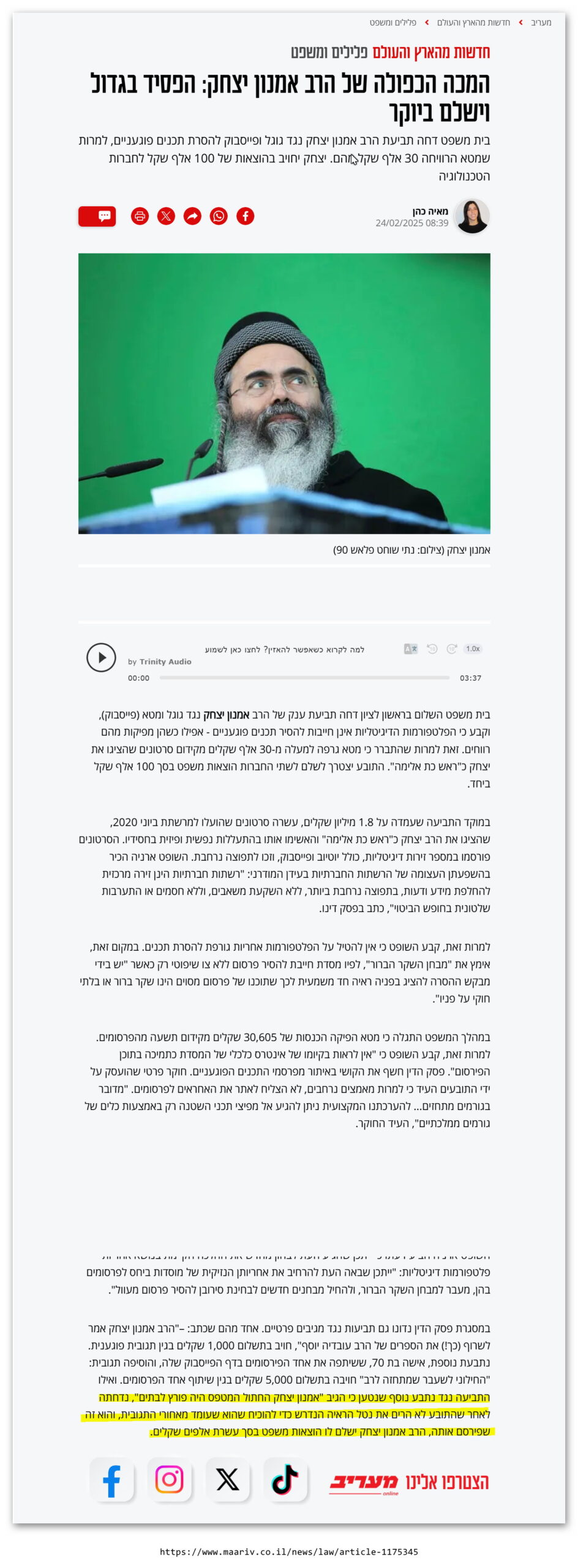
ה"ט (פתח תקוה) 45630-08-23 Eyal Union N. Moshe Katz
before Request for a restraining order against threatening harassment.
המבקש הוא רו"ח, ובעבר שימש חבר מועצה ומנכ"ל עיריית כפר סבא. לטענתו, המשיב פרסם ברשת החברתית "פייסבוק", פרסומים מכפישים ופוגעניים עליו, על משפחתו ועל אביו המנוח. לטענתו, הרקע לפרסומים הוא רצונו של המשיב כי המבקש יפסיק לתמוך בבחירת ראש עיריית כפר סבא בבחירות לרשות המקומית.
הפרסומים שהציג המבקש פורסמו על ידי פרופיל בשם "Moses King". הוצג דף הפרופיל מיום 16.8.2023, ובו 4 פרסומים, ומיום 15.8.2023 ובו 3 פרסומים, ושני פרסומים נוספים ללא תאריך. בכתב טענות שהוגש לאחר הדיון במעמד צד אחד, צרף המבקש פרסומים נוספים: 3 פרסומים מיום 21.8.2023, 2 פרסומים מיום 20.8.2023, וכן התכתבות מיום 15.8.2023 של המשיב עם ב"כ המבקש.
The applicant claimed that he intended to file a lawsuit against the respondent. Defamation lawsuit והוא צרף לבקשתו מכתב ששלח בא כוחו למשיב, בו דרש המבקש מהמשיב פרסום התנצלות ותשלום פיצוי ללא הוכחת נזק בסך 420,000 ש"ח. עוד צורף לבקשה אישור, לפיו המבקש הגיש על המשיב תלונה במשטרה ביום 16.8.2023.
הפרסומים לכאורה מבזים ומכפישים, ופוגעים בשמו הטוב של המבקש, משפחתו ואביו המנוח. כך, נכתב בהם בין השאר: "אומרים שאתה הומו", "אייל יוניאן כפ"ס עיר נקייה כי לקחת את כל הכסף השחור משוחד", "אבא יוניאן "אנס" נשים ביקשת 420.000 תקבל יותר בחדירות בכלא, מקלות אצבעות כלי זין. התחת שלך יהיה להיט בכלא הכי מבוקש", "אייל יוניאן אבא שלך חולה מין! התאכזרות התעללות זה אצלכם עובר בגנים", "אייל רע בוגד ביובל הבן זוג שלו מספר שנים. אבא שלו דפק בו ובאמא שלו מכות רצח שבר להם את העצמות הגנטיקה האכזרית המטורפת ירש מאביו", "אייל יוניאן מלך השוחד שהחליף את הרפי כמנכ"ל העיר. בנה וילה בשנתיים שוחד".
התנהגות המשיב בדיון שהתקיים במעמד שני הצדדים הייתה שלוחת רסן. המשיב המשיך בהתקפות והשמיע דברי בלע נגד המבקש ובא כוחו. המשיב קרא לעברו של המבקש מספר פעמים "משה קצב", נופף בבד או בגד בצבע כתום, והשמיע אמירות כגון "הוא יבוא לי בכתום". למרות שהתבקש חזור ושנה על ידי בית המשפט לא לעשות כן, המשיב התפרץ ללא הרף ובחוסר כבוד לדברי בא כוח המבקש ובית המשפט ואף גידף. המשיב אישר כי הוא כתב את הפרסומים נגד המבקש, נגד אמו ונגד אביו המנוח. בעדותו המשיב המשיך בקללות והאשמות הן כנגד המבקש והן כנגד בא כוחו על לקיחת שוחד.
The respondent submitted his correspondence with the applicant from 26.6.2023 (Exhibit MES/1) at the hearing. In the correspondence, the respondent wrote a lot of text to the applicant, most of which is unclear. Between the lines, it can be understood that the respondent requests that the applicant not support the local authority elections for the incumbent mayor, but for another candidate. Starting from 7.7.2023, apparently after the respondent realized that the applicant had not responded to his requests, in correspondence dated 7.7.2023 and 11.7.2023, he began to defame the applicant.
Since the respondent continued to use the argument given to him during the hearing to further humiliate the applicant, the court ordered the respondent to finish his statement. At that point, the respondent began to rampage in the courtroom. First, he threw sheets of paper at the applicant, and shouted and cursed loudly. He then forcibly pushed the court security guard who was trying to stop him from reaching the courtroom stage, and threw a framed picture onto the courtroom table. At least three court security guards were required to subdue the respondent and remove him from the courtroom.
ברע"א 6861/22 יוספה ברק טמיר נ' ד"ר שרון אלרעי פרייס (31.10.2022), Honorable Justice D. Barak-Erez ruled on the distinction between the purposes of protection against threatening harassment and the purposes of defamation law:
"11. ….. אכן, ביטוי הפוגע בשמו הטוב של אדם עשוי להיות רלוונטי במקרים המתאימים הן לחוק איסור לשון הרע והן לחוק למניעת ההטרדה המאיימת. אולם, בעוד שבגדרו של חוק איסור לשון הרע הבחינה המשפטית מתמקדת בתוכנו של הביטוי, על רקע החשש שהוא צפוי לבזות ולהשפיל את האדם הנוגע בדבר בעיני הבריות, החוק למניעת הטרדה מאיימת ממוקד בהשפעתו הנמשכת של הביטוי על האדם עצמו, בשל כך שהוא מאיים עליו או פוגע בשלוות חייו, בפרטיותו, בחירותו או בגופו. על רקע האמור, ברי כי בגדרו של חוק זה יש משמעות רבה לכך שהביטוי הוא חוזר ונשנה. כמו כן, וכפי שמעיד עליו שמו – החוק למניעת הטרדה מאיימת ממוקד במניעה עתידית ומכאן חשיבותו.
12. אם כן, אין מקום להנחה שמתחייב "סיווג" חד-חד-ערכי של פרסומים כלשון הרע או כהטרדה מאיימת. כאמור, עשויים להיות מצבים שבהם פרסומים יניחו עילה לתביעת לשון הרע (בשל הביזוי כלפי אחרים) וכן ישמשו עילה למתן צו למניעת הטרדה מאיימת (בשל האפקט שלהם על האדם עצמו). לצדם עשויים להיות מצבים שפרסומים ייפלו רק לגדרו של אחד מהחוקים הנזכרים, או אף לא לאחד מהם.
על דרך ההשאלה, ניתן להזכיר את המטאפורה שעשה בה שימוש לפני שנים רבות השופט א' ברק, ביחס להיקף תחולתן של העוולות השונות לפי פקודת הנזיקין [נוסח חדש] – בהסבירו כי אין לדמותן ל"מגנטים של אחריות, באופן שכל הנמצא בתחום המשיכה של אחת העוולות מוצא ממילא מתחום המשיכה של עוולה אחרת", אלא ל"רשתות רשתות, המוטלות, זו על גבי זו… [כך ש]לעתים נתפסת מערכת עובדות נתונה על-ידי רשת אחת בלבד. לעתים היא נתפסת על-ידי מספר רשתות" (ע"א 243/83 עיריית ירושלים נ' גורדון, פ"ד לט(1) 113, 125 (1985)). הדברים נכונים, בשינויים המחויבים, אף ביחס לענייננו."
לאור האמור, וכן לאור תוכנם של הפרסומים המשמיצים, היקפם ותדירותם, פרסומי המשיב מהווים הטרדה מאיימת כהגדרתה בסעיף 2(ב)(4) לחוק מניעת הטרדה מאיימת, תשס"ב-2001. לבד מהיות הפרסומים משמיצים, הם חוזרים ונשנים, והרושם הוא שאם לא יינתן הצו למניעת הטרדה מאיימת, המשיב ימשיך להפיץ פרסומים דומים. נוסף לכך, לנוכח התנהגותו המתוארת של המשיב, הוא עלול לפגוע בשלוות חייו של המבקש.
Therefore, I order that the order issued on August 20, 2023 shall remain in effect and be in effect for 6 months starting on August 20, 2023.
ב"כ המבקש עתר לחיוב המשיב בערובה להבטחת קיום הצו. בשלב זה בית המשפט יימנע ממתן סעד זה מתוך צפייה שהמשיב יקיים את ההחלטה. על כל פנים, ככל שיהיה צורך, המבקש יהיה רשאי להגיש בקשה מתאימה.
המשיב ישלם למבקש את הוצאות ההליך בסך של 1,500 ש"ח.
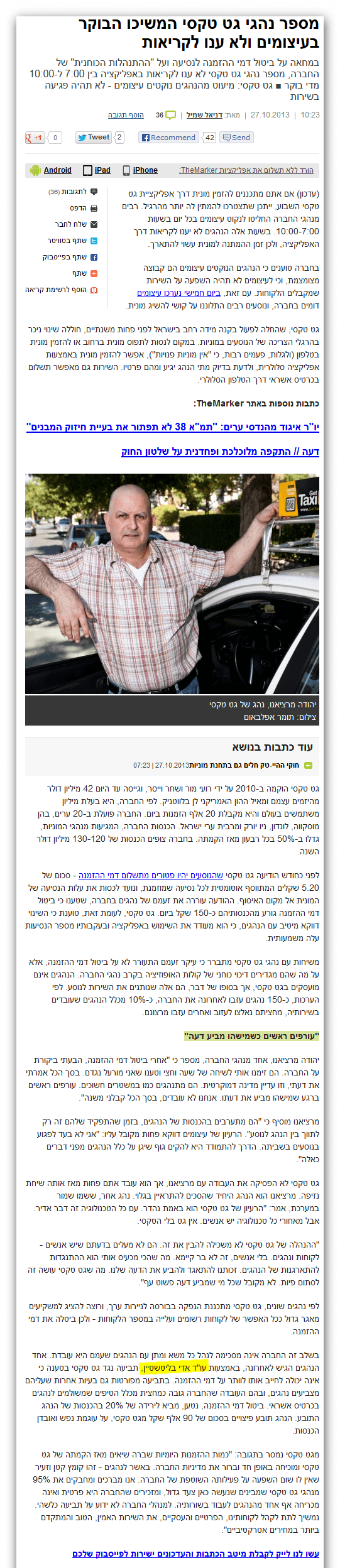
ה"ט (פתח תקוה) 34139-08-23 Daniel Fallah N. עו"ד דוד חץ
1. Before an application for an order under the law to prevent threatening harassment due to violation of her privacy and alleged threats by the respondent.
These are residents of two adjacent apartments on the same floor in an apartment building in Hod Hasharon.
It should be noted that between the applicant's partner and the respondent there is a mutual order to prevent threatening harassment, which was granted by agreement as part of another procedure.
On 14.8.23, the applicant filed her application and at that time appeared in court as a party, making the following claim against the respondent (page 1 of the minutes, lines 10-20):
"כל שניה מחפש אותנו על קטנות ולא פונה לבן זוג שלי יש לו הרחקה מבן הזוג שלי. … בגלל שלבן זוג שלי יש הרחקה הוא פונה אליי. … הוא בא וטוען מה אתם לא רוצים לעזוב לגלבוע, אנו רכשנו את הבית ממיטב כספנו והוא אומר לנול עזוב את הבית. הבן אדם שוכר את הבית וכל הזמן בא ומוציא הערות וזה מזכיר לי דברים מהעבר שלא תיארתי לעצמי. … התקין מצלמה ללא אישור של בעל הבית וללא אישור של שום דבר … אני רוצה שלא יפנה אלי וזה מפחיד אותי."
Following the above, an ex parte order was issued by the Honorable Judge Hagit Bulmesh, and a hearing was scheduled for the parties, which was held before me as part of the court's recess.
At the beginning of the discussion, I tried to bring the parties to an agreement, which in my opinion would have resulted in a better result for both than any forced solution in a decision, but unfortunately this was not successful, and therefore the parties were questioned and their summaries were presented, and now the time for the decision has come.
In the applicant's cross-examination, it became clear that the allegations she made against the respondent in the application regarding the existence of mental disorders and his being a patient in psychiatric treatment lacked any basis, but even after she was presented with medical records regarding him indicating the absence of any psychiatric findings or treatment, she refused to retract these allegations, although she did not justify her insistence in any way and did not point to any source of their truth.
I will clarify and emphasize right away that the existence of a mental disorder or the fact that a person is undergoing psychiatric treatment does not constitute any denial or violation of any of his rights, but the fact that precisely after it has been proven to a person that there is no basis for his claims against someone who attributes such a mental condition or treatments to him, the latter continues to insist on attributing them to him indicates the negative intent of the attributor.
Even when the applicant was asked during her interrogation about the threats she attributed to the respondent, it became clear that this consisted of smiles that she interpreted as condescending, which were directed primarily at her partner, but since she was with him at the time, she saw them as directed at her as well (page 7 of the minutes, lines 10-22) and claimed that she was afraid of what would happen to them.
In the questions that the respondent asked the applicant during her interrogation, he presented her with the claim that the smiles he directed at her partner were mutual and stemmed from the embarrassment involved in a forced meeting between two parties to a mutual order to prevent threatening harassment (ibid., lines 13-15), and without the applicant contradicting this claim, she insisted that these smiles scared her.
With regard to the claim that he had made suggestions to the applicant and her partner to leave their apartment, the respondent did not deny the actual request, but in his cross-examination he claimed that his suggestion on this matter stemmed from the fact that her partner had told him from the first day he arrived at the place - while normal relations still prevailed between them - that he was suffering from the noise in the shared house and quarreled with neighbors, and therefore the respondent, who owns a detached house, suggested that he move in with the aim of making it easier for him and nothing more (p. 10 of the minutes, lines 1-4).
According to the respondent, this is generally an attempt to help and an act of charity (page 4 of the minutes, lines 27-29 and page 5, line 33) and should not be seen as a threat or threatening harassment.
As for the issue of violation of privacy, it turned out that on the day the respondent installed a camera near the entrance door to his house, the applicant filmed it and rushed to submit her application (ibid., lines 23-29), meaning that this is a claim that the mere installation of the camera constitutes a violation of her privacy.
With regard to the installation of the camera, the respondent claimed that since the applicant and her partner urinated near the door of his apartment, played loud music to disturb him, threatened his wife to refrain from holding classes she held in their apartment, filmed inside his house and made threatening noises whenever he entered his apartment, and after he also attributed mental problems and taking psychiatric medication to them, he was afraid of them and of their lack of boundaries, and therefore, after receiving permission from more than 50% of the building's residents, he installed a camera near the door of his house to protect himself from them (p. 8 of the minutes).
The respondent confirmed that the camera can be directed using an app installed on his mobile phone, but emphasized that it is directed at the hallway of the building next to the door of his house, without photographing the door of the applicant's and her partner's apartment, and he even showed me, using his mobile phone, the image that the camera captures live as it was directed during the hearing, which he claims demonstrates this (ibid., line 17).
The respondent did not deny that the camera records audio, but claimed that the audio quality was poor (ibid., line 32).
סעיף 2(א) לחוק מניעת הטרדה מאיימת קובע כי – "Threatening harassment is the harassment of a person by another in any way or the making of threats against him, in circumstances that provide reasonable grounds to assume that the harasser or the threat may again harm the person's peace of mind, privacy or freedom or that he may harm his body." וסעיף 2(ב) מציע מספר דוגמאות אפשריות, אך לא ממצות, לכך.
בית המשפט הסביר כבר ביחס ליסודות הנדרשים לקיומה של עילה למתן צו למניעת הטרדה מאיימת כך (ע"א (מחוזי מרכז) 26728-07-18 Shaul Stanislav Amsterdamsky v. Michal Golan Greenberg (25.7.2018) Paragraph 21. Emphasis underlined in the original) –
"The law actually lists two elements whose existence constitutes grounds for issuing an order to prevent threatening harassment: The first element – requires that the person against whom the request is made has previously harassed or made threats against the applicant; whereas The second element – Requires that the circumstances do indeed support and establish the conclusion that that person might Harass or threaten to harm the peace of life, privacy, liberty or person of the applicant in the future (ר' בר"ע (מחוזי י-ם) 179/04 נס שובל נ' מרים ניסים (10.8.2004) בפס' 20)."
We learn, therefore, that the elements that establish grounds for granting an order to prevent threatening harassment, as requested in the case at hand, include both a factual element that has already occurred and been proven, and an element of a probable conclusion from the circumstances surrounding the proven factual foundation.
However, in our case, the request fails already at the stage of proving the factual basis.
It has not been proven that the respondent made threats against the applicant, and with all due respect to the smile that she herself confirmed was directed at her partner – especially in light of the reasoning offered by the respondent and her confirmation that it was not actually directed at her but was only understood by her as directed at her as well – this does not prove a threat, even if I assume for the purposes of this decision that the feeling of fear she testified to is authentic.
I will not deny that it is possible to smile threateningly towards others, but it has not been proven that this was the case in our case, even though the burden of proving this lies with the applicant and the respondent's explanation is not unfounded on its face.
These things are also true with respect to the applicant's claim that the respondent suggested they leave the house.
Even if I do not accept the respondent's explanation that this is a proposal that is entirely a benevolent act, I do not believe that even given the friction between neighbors, with one claiming noise or invasion of privacy and the other denying it and claiming unfounded hypersensitivity on the part of the defendant and a history of neighborly disputes with him, due to which he has already left one place of residence (page 9 of the minutes, lines 3-5), a statement by one of them to the other that he is suggesting that he leave the house does not necessarily amount to an act of threatening harassment and may contain a suggestion to solve the problem - even if it is somewhat defiant.
It should be noted that sinceFreedom of expression It is a protected value in a democratic country and cannot be easily reduced. Even unpleasant discourse between people is still worthy of protection as long as it does not cross the thin line of a threat that raises concerns about future threatening harassment, and this was not proven in our case.
Also regarding the claim of invasion of privacy, invasion of privacy against the applicant was not proven as the first element required for the existence of grounds for issuing an order, as it was not proven that the respondent photographed the door of the applicant's house, let alone the interior.
יוזכר כי ההגדרה הרלוונטית של פגיעה בפרטיות היא "Photographing a person while In the sole possession of" (סעיף 2(3) לחוק הגנת הפרטיות, ההדגשה שלי), כאשר אף אם מתבצעת פגיעה בפרטיות אחת מן ההגנות מפני תביעה בגינה היא כאשר – "… The defendant or accused committed the harm in good faith. … To protect a legitimate personal interest of the offender" (סעיף 18(א) לחוק).
In this context, it should be mentioned that the respondent here claimed that acts of harm were committed against him, his property and his peace, and that the camera was installed following these acts and in order to document and prevent them.
בהתייחס באופן ספציפי לפגיעה בפרטיות באמצעות התקנת מצלמות נקבע בפסיקה כך (ת"א (ראשל"צ) 4620/08 Oscar Albert Krasocki v. Haim Smadar (25.11.2012) Paragraph 52. Emphasis mine and not in the original) –
"… התרשמתי שהתקנת המצלמה הנסתרת נעשתה מתוך רצון כן לברר את זהות הגורם נזק לרכושם ובכך למנוע הימשכותם של מעשי ונדליזם. בכך ביקשו הנתבעים להגן על "עניין אישי כשר" כאמור בסעיף 18(2)(ג) לחוק הגנת הפרטיות. בהקשר זה יש לציין כי פעולה הנעשית לשם הגנה על רכוש הוכרה על ידי הפסיקה כ"עניין אישי כשר" ביחס לעוולת לשון הרע … על דרך ההיקש יש להחיל קביעה זו גם לגבי הצבת מצלמה Hidden Designed to document an event of damage to property or life. …
For these reasons, I determine that the installation of the hidden camera by the defendants was done for a proper purpose, the purpose of which is to protect the defendants' proprietary interest. Furthermore, the placement of the hidden camera was done in a manner that does not exceed reasonableness, as detailed above. Therefore, the act of taking the photograph does not in itself establish a cause of action for the plaintiffs for compensation by virtue of law. Privacy protection"."
It is important to emphasize here that this is not a hidden camera, but an overt one.
בהתייחס באופן ספציפי לצילום חזית ביתו של אדם נקבע כך (ת"א (מחוזי י-ם) 7236/05 Mordechai Levin v. Avni Ravid (15.5.2006) Paragraph 14) –
"חוק הגנת הפרטיות, התשמ"א – 1981, כולל רשימה סגורה של מעשים שיש בהם משום פגיעה בפרטיות. צילום חזית ביתו של אדם אינו נמנה עליהם. … גם אם ננקוט בדרך של פרשנות נדיבה ומרחיבה, לא ניתן לכלול איסור על פירסום תצלום חזית ביתו של אדם; ולא בכדי. ביתו של אדם – פנימה – הריהו מבצרו. חזיתו הפונה כלפי חוץ, חשופה מטבע ברייתה כלפי כולי עלמא."
(לעניין צילום אדם על סף דלת ביתו ראו ת"א (חדרה) 30777-04-17 Irina Tsouglin v. Meir Malul (14.5.2019) פסקה 55, וכן ראו גם ת"א (פ"ת) 9403-01-15 Hania Perezberg v. Limor Gilad (1.11.2015) and more).
It was found that even with respect to this claim of the applicant, the factual basis indicating a violation of the applicant's privacy was not proven.
In the absence of proof of this element, it is understood that the grounds for granting the requested order do not exist.
It goes without saying that the mere claim that it is in principle permissible to point the camera at the applicant's house does not meet the required element, both in light of the legal determination that photographing the front of the house is not a violation of privacy and, even more so, due to the fact that the determination that a theoretical possibility of an illegal act that is not an apparent concern stemming from actions committed by the respondent in the past would create an impossible reality of imposing sweeping prohibitions is as far removed from the purpose of the law as the east is from the west.
Now regarding the claim that the camera also records audio.
It is not impossible that in a certain situation, placing a camera that also records audio in the public domain will violate the prohibitions imposed under the Wiretapping Law, but this is not the case in every situation.
לעניין זה יש לזכור האפשרות המוגנת הנזכרת בסעיף 8(1)(ג) לחוק זה העוסקת בהאזנה לשיחה שנעשתה ברשות הרבים אם נעשתה – "Randomly and in good faith, by way of a candid recording intended for public release" (וראו דברי בית המשפט בנושא זה בתא"מ (שלום ת"א) 6782-12-11 David Kalev v. Tel Aviv-Yafo Municipality (3.5.2017) paragraph 38 which dealt with hidden cameras – a serious situation for our purposes).
In this case, there was no evidence of an actual recording of a conversation in which the applicant participated. There is no doubt that the camera is visible – certainly to the applicant – and is placed in the public domain, and that to the extent that a conversation in which the applicant participates is recorded, it will be done randomly and, according to the respondent, for the purpose of documenting his injuries that will be used in proceedings concerning the fact that they are a type of public disclosure.
The conclusion drawn from the foregoing is that, with respect to all of the applicant's claims, the necessary elements for the existence of grounds for issuing an order to prevent threatening harassment have not been proven.
Therefore, the request is rejected.
נוכח התוצאה האמורה שקלתי לפסוק הוצאות לחובת המבקשת בהתאם לאמור בסעיף 9 לחוק מניעת הטרדה מאיימת אך על מנת שלא להעצים את החיכוך בין הצדדים על ידי "הוספת שמן למדורה" ומאחר שבשים לב לרגישות בין הצדדים ניתן אולי לקבל כי חששה של המבקשת אותנטי אף אם אינו מבוסס משפטית מצאתי בסופו של דבר לנכון שלא לעשות צו להוצאות.
right Appeal to the District Court Center-Lod within 60 days.
Frequently Asked Questions Regarding a Threatening Harassment Prevention Order
-
How long does it take to apply for an order to prevent threatening harassment?
An application for an order to prevent threatening harassment should be filed immediately or very soon after the incident for which the application is being filed occurred.
As time passes, the chances of obtaining the order decrease. -
Is it possible to file a complaint with the police and request an order to prevent threatening harassment?
Absolutely. There is no reason to request an order to prevent threatening harassment in addition to filing a police complaint. In most cases, it is recommended to attach the reference for Filing a police complaint For a request for an order to prevent threatening harassment.
-
Do I need a lawyer to apply for an order to prevent threatening harassment?
You do not have to use the services of a lawyer to obtain an order to prevent threatening harassment, but a lawyer can certainly increase the chance that such an order will actually be granted to you.
-
How long does it take to issue an order to prevent threatening harassment?
A judge can issue an order to prevent threatening harassment immediately, pending a hearing with both parties present. After the hearing, the court will decide whether to revoke the order to prevent threatening harassment or extend it.