What is good faith?
Good faith is a standard of behavior. When we say that someone is expected to act in good faith, we mean that that person is expected to act in a fair and acceptable manner.
On the other hand, if someone is said to have acted in bad faith, it means that that person acted in an unfair, unacceptable, or dishonest manner. Abuse of any right he is entitled to.
For example: Let's say a buyer and seller of an apartment agreed that payment for the apartment would be made by 12:00, and if the buyer does not pay on time, he will be forced to pay Agreed compensation In the amount of 10% of the value of the apartment. In fact, the buyer paid at 12:30. Ostensibly, the buyer violated the agreement and the seller is entitled to demand compensation in the amount of 10% of the value of the apartment. However, filing a claim for financial compensation when it is only a 30-minute delay may be considered bad faith, and even Abuse of legal proceedingsThere is a high chance that in these circumstances the claim will be rejected and the seller will even be charged withLegal expenses (Although he is not Breached the contract).
Good faith in performing a contract
סוגיית חובת תום לב בדיני חוזים מוסדרת בשני סעיפים: סעיף 12 וסעיף 39 לחוק החוזים (חלק כללי), תשל"ג-1973.
Article 12 states as follows:
Good faith in negotiations
12. (a) In negotiations leading up to the conclusion of a contract, a person must act in an acceptable manner and in good faith.
(b) A party who did not act in an acceptable manner and in good faith is liable to the other party for compensation for the damage caused to him as a result of the negotiations or the conclusion of the contract, and the provisions of sections 10, 13 and 14 Contract Law (תרופות בשל הפרת חוזה), תשל"א-1970, יחולו בשינויים המחוייבים.
And Section 39 states as follows:
Good faith existence
39. In the performance of an obligation arising from a contract, one must act in an acceptable manner and in good faith; the same applies to the exercise of a right arising from a contract.
While Article 12 of the Contract Law deals with good faith before the conclusion of the contract, Article 39 of the Contract Law deals with the performance of the contract in good faith, that is, a stage after the conclusion of the contract. Either way, the Contract Law emphasizes the importance of the principle of good faith at all stages of the contract.

The damages that can be claimed due to a breach of good faith in the performance of a contract
The Supreme Court's ruling is a ruling that binds the other legal instances, and therefore it is important to be aware of these rulings.
The Supreme Court has previously been required to consider the type The compensation that a person injured by a breach of the duty of good faith may claim. בעניין זה נקבע במסגרת ע"א 4832/23 אל מול הים בע"מ נ' עיריית בת ים, בין היתר, כך:
הסעד הבסיסי אותו מעניק סעיף 12(ב) לחוק החוזים בגין הפרת חובת תום הלב בשלב הטרום חוזי הוא סעד של "פיצוי שלילי" – פיצויי הסתמכות. פיצויים כאלה נועדו להחזיר את הנפגע למצבו אילו לא היה נכנס למשא ומתן או אלמלא בוצעה כלפיו התנהגות חסרת תום לב.
כך למשל, צד למשא ומתן שהוציא כספים במסגרת משא ומתן (למשל שילם דמי תיווך או שמאות), אך המשא ומתן לא הבשיל לכדי חוזה עקב חוסר תום לב של הצד השני – יהיה זכאי לפיצויים שיחזירו אותו למצב בו היה אילולא נכנס למשא ומתן (קרי – להחזר הוצאותיו במסגרת המשא ומתן. ע"א 230/80 פנידר, חברה להשקעות פתוח ובנין בע"מ נ' קסטרו, פ"ד לה(2) 713, 727 (1981); גבריאלה שלו ואפי צמח דיני חוזים 136-124 (מהדורה רביעית 2019) (להלן: שלו וצמח); דניאל פרידמן ונילי כהן חוזים 744-731 (כרך א, מהדורה שנייה 2018)).
אולם, במקרים נדירים הכירה הפסיקה גם באפשרות של "פיצוי חיובי" – פיצויי קיום בגין חוסר תום לב במשא ומתן. פיצויים כאלה מגנים על אינטרס הציפייה של מי שנפגע, והם נועדו להחזיר את הנפגע למצב בו היה אילו החוזה היה מתקיים (ע"א 6370/00 קל בנין בע"מ נ' ע.ר.מ. רעננה לבניה והשכרה בע"מ, פ"ד נו(3) 289 (2002) (להלן: עניין קל בניין); ע"א 8143/14 חלפון נ' בנק דיסקונט למשכנתאות בע"מ, פסקאות 17-15 לפסק דינו של השופט נ' הנדל [נבו] (29.1.2017) (להלן: עניין חלפון); שלו וצמח, בעמודים 137-136).
פסיקת פיצויי קיום בקשר עם חוסר תום לב במשא ומתן ולפני שהצדדים התקשרו בקשר חוזי היא נדירה בשל חופש החוזים של הצדדים, קרי החירות שלהם לבחור ולהחליט האם להתקשר בהסכם אם לאו. משום כך, בית המשפט אינו מעוניין בדרך כלל "להשלים את החסר" ולחתום בשם צדדים על חוזה שהם לא היו מעוניינים בו.
סעד כזה מעורר אפוא קושי עקרוני, לאור עקרון חופש החוזים המקנה לצדדים במשא ומתן את "חופש הנסיגה" עד לרגע האחרון. מתן סעד כזה עלול להרתיע צדדים מלקיים משא ומתן מלכתחילה, או להפעיל לחץ על צדדים שכבר נמצאים במשא ומתן – להתקשר בהסכם בניגוד לרצונם. זאת ועוד. סעד של פיצויי קיום עשוי לחייב את בית המשפט בהשלמת מידע שלא קיים בפניו: אודות השאלה האם אלמלא חוסר תום הלב, היה החוזה משתכלל בסופו של דבר; ואם כן – באילו תנאים.
Therefore, compensation for subsistence will only be awarded in cases where the negotiations have reached such an advanced stage that it is clear what the content of a contract that would have been signed would have been; but the final completion of the contract did not take place due to the lack of good faith of one of the parties. In such a situation, placing the parties in the position they would have been in if the duty of good faith had not been breached – means awarding compensation for subsistence. (Kel Binyan case, on pages 300-302; Halfon case, in paragraph 16 of the judgment of Justice N. Hendel; Shalev and Tzemach, on pages 136-143).
…
כאמור, אני סבורה שאין להתערב גם במסקנתו של בית משפט קמא לחייב את אהרוני באופן אישי בסכום הפיצוי. הלכה פסוקה היא שהחובה לנהל משא ומתן בתום לב לפי סעיף 12 לחוק החוזים, חלה על כל צד למשא ומתן ולא רק על מי שהופך בסופו של יום לצד לחוזה. בפרט, החובה לנהוג בתום לב עשויה לחול גם על אורגנים ונושאי משרה בתאגידים. הפרה מודעת של חובת תום הלב על ידי אורגן או נושא משרה, עשויה להוביל לכך שתוטל עליו אחריות אישית (ד"נ 7/81 פנידר, חברה להשקעות פתוח ובנין בע"מ נ' קסטרו, פ"ד לז(4) 673 (1983); ע"א 313/08 נשאשיבי נ' רינראוי, פ"ד סד(1) 398, 423-420 (2010); שלו וצמח, בעמודים 113-112).

The duty of good faith also applies to court proceedings (not just in contract law).
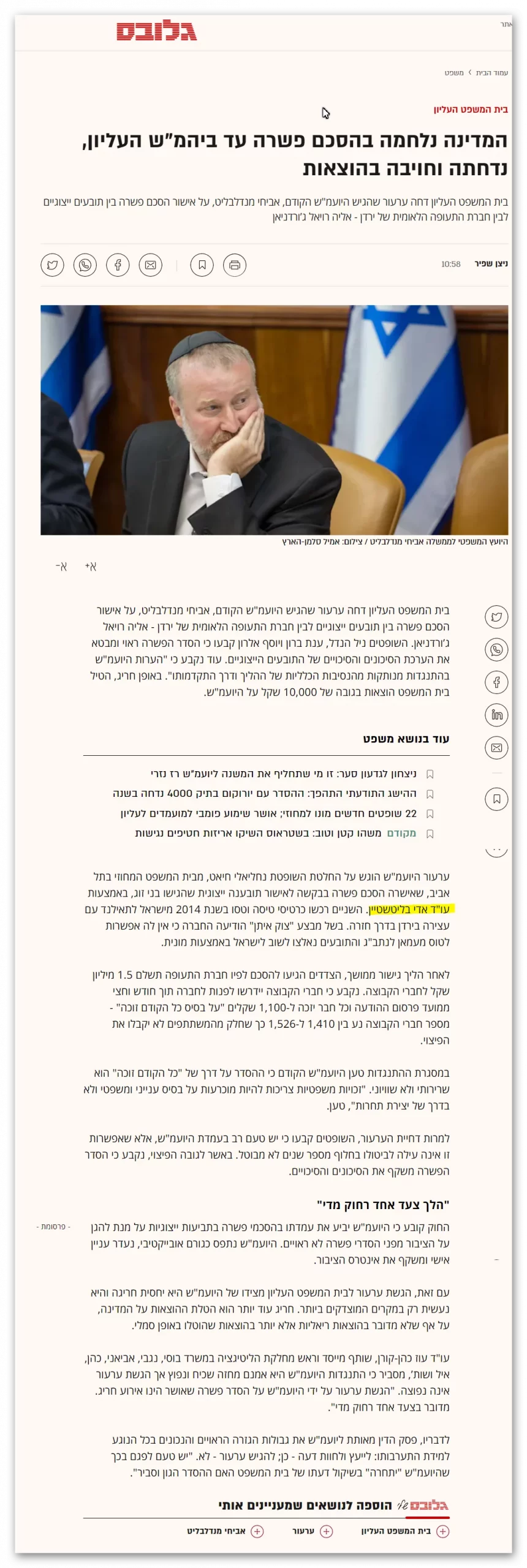
החובה לנהוג בצדדים להליך המשפטי בתום לב ובדרך מקובלת הוכרה גם כן בפסיקתו של בית המשפט העליון. שימוש לרעה בהליכי משפט, לדוגמה, הוכר כהפרה של חובת תום הלב. כך לדוגמה נקבע על ידי בית המשפט העליון במסגרת רע"א 7770/21 אימן מרעי נ' אחמד בריה:
Although this is relatively new secondary legislation, as is known, the prohibition on the abuse of legal proceedings is not new. This is a prohibition that stems from the principle of good faith, which is a paramount principle in our system, and its purpose is twofold: on the public level – to maintain the integrity and purity of the judicial process, and on the private level – to prevent unfair outcomes between litigants litigating before the courts. (בש"א 6479/06 בנק דיסקונט לישראל בע"מ נ' שנפ, פסקה 5 (15.1.2007)).
בפסק דין אחר של בית המשפט נקבע בעניין חובת תום הלב כך (רע"א 7430/17 אופק א. אחזקות (2005) בע"מ נ' יוסף זינגר):
"עקרון תום הלב מטיל על בעלי דין לנהוג בהגינות וביושר האחד כלפי השני … בעלי דין אינם בוחרים, במובן החוזי, להימצא במסגרתו של ההליך המשפטי … אולם מרגע שהם באים בין כתלי בית המשפט עליהם לנהוג בהגינות ויושר האחד כלפי השני, וכן כלפי המערכת השיפוטית הפועלת לשם בירור הסכסוך בין בעלי הדין.
The laws that regulate the legal procedures do indeed regulate the 'rules of the game,' but the law is not limited to them. The duty of good faith in the litigation context imposes on the parties an obligation to act to clarify the disputes that exist between them, alongside their litigation rights, and not to exploit them to obtain advantages that exceed the purpose of these rights." (ההדגשה שלי-ע'ב') (רע"א 8467/06 אבו עוקסה נ' בית הברזל טנוס בע"מ, פסקאות 25-23 (8.7.2010); כן ראו: ע"א 3496/15 בבלפור נ' גבעת מרום בע"מ, פסקה 9 (17.1.2017)).
Therefore, the claim of limitation raised by the bidders in this case is vitiated by a lack of procedural good faith and must be rejected.

In conclusion
The duty of good faith is the duty to act fairly towards the other party, and not to cause them any damages. A breach of the duty of good faith may lead to a situation in which the injured party may be able to demand compensation for all damages suffered, and even all the money that would have accrued to the injured party if the contract had been fulfilled (liquidated damages).
The duty to act in good faith is stipulated in the Contracts Law. Sections 12 and 39 establish the duty to act in good faith during the negotiation phase for the conclusion of the contract, and also after the contract has been concluded between the parties.
There is a duty to act in good faith even when conducting proceedings in court, and not only within the framework of contract law.