What is contractually agreed compensation?
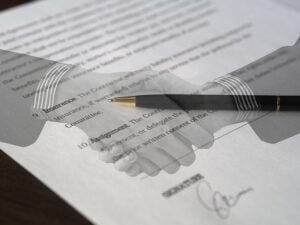
Contractual damages are monetary compensation agreed upon by the parties to a contract. The contractual damages will be paid by the party that breached the agreement to the party that was harmed by the breach of contract. Generally, the contractual damages will not be paid for every breach except for a fundamental breach (a significant breach), and only after the breaching party has been given a reasonable period of time to remedy the breach (most agreements specify a period of seven days or seven business days – note: this is not the same period of time. Seven business days is more than seven days).
Agreed compensation is Compensation without proof of damageThat is, the injured party does not need to prove that he was injured in any way in order to receive the agreed compensation stipulated in the agreement. However, if the party injured by the breach of the agreement suffered damages that he can prove, there is no obstacle to claiming both the compensation agreed in the contract and Damages for breach of contract For the damage that the injured party can prove (for example, compensation agreed upon in a home sales contract, and also financial compensation for damage caused to the home, insofar as it concerns a home purchase/sale transaction).
What is the purpose of contractually agreed compensation?
The purpose of compensation agreed upon in a contract is primarily to deter breach. Once a party to a contract knows that he may have to pay a significant amount of money, without proof of damage, if he breaches the contract, this usually causes him to try to fulfill the contract as it is written.
בדרך כלל פיצוי מוסכם בחוזה נקבע על סך 10%-30% משווי העסקה. לדוגמה: פיצוי מוסכם בחוזה מכר דירה ששוויה הוא שני מיליון שקלים עשוי לעמוד על 200-600 אלף ש"ח.
Another purpose of the agreed compensation is to allow the injured party relatively quick relief for the breach of the contract. There is a significant difference in the complexity of the claim and the length of time it will take to pursue a claim to receive the compensation agreed in the contract compared to other remedies.
How do you receive agreed compensation after breach of contract?
To the extent that the breacher of the contract has not cured the breach within a reasonable period of time (the time period for curing Breach of contract (usually determined in the contract itself), the injured party may demand the agreed amount of compensation stipulated in the contract.
אין טעם "לרוץ" באופן מיידי לבית משפט על ידי הגשת Financial claim Because this involves significant costs (such as court fees, attorney fees, etc.). It is advisable to first send Warning letter before filing a claim and allow the breaching party an opportunity to pay the agreed compensation without taking legal action. In these cases, it is always advisable to consult with Claims lawyer Experienced in order to understand how best to proceed in the case relevant to you.
Usually, the breaching party will not rush to pay the compensation agreed upon in the contract following the warning letter, but he will usually respond to the warning letter and detail his arguments as to why, in his opinion, he is not obligated to pay you compensation as stipulated in the contract. These arguments may be useful to you to To draft a claim more correctly and more wisely.
If the contract violator does not pay the agreed-upon monetary compensation after sending the warning letter, there will be no choice but to file a lawsuit in court. The lawsuit must include the contract detailing the clause relating to the agreed-upon compensation, as well as evidence that the contract was indeed breached by the defendant.
For example: If compensation is stipulated in a contract due to late payment, the contract and confirmation that payment was indeed made late must be attached to the claim, or it must be claimed that payment was never made.
Is the court obliged to award the plaintiff the entire amount of compensation agreed upon?
The court is not required to award the plaintiff the full relief he is seeking. However, when it comes to compensation agreed upon in a contract, the defendant will have to convince the court why he is not required to pay the plaintiff compensation in full or in part.
There are cases where the court has rejected a claim for agreed compensation. These are usually cases where compensation was stipulated in a contract with a commercial company. Sometimes it is determined that these clauses are within the scope of Depriving conditions In a uniform contract.
Who is the agreed compensation claimed from when there are multiple parties to the contract?
There are situations in which there are multiple parties to the agreement. For example: three partners (not incorporated as a company) who decided to purchase a business.
In such a case, one must examine how the contract was drafted. If the contract was drafted in such a way that a breach of contract would allow the injured party to claim agreed-upon compensation from each of the partners, there is no obstacle to filing a single lawsuit against all three.
However, the agreement may be worded differently and stipulate that the agreed compensation can only be claimed against the person who actually committed the breach. In such a case, if, for example, the agreement stipulates that each of the three partners must pay their share by a certain date, and two of the three partners paid their share on time, in such a case the injured party will be able to claim agreed compensation only from the partner who did not pay on time (and thus violated the agreement).
מאוד חשוב לנסח את ההסכם בצורה שתקנה לצדדים את ההגנה המקסימלית. תמיד יוצאים מנקודת הנחה שמטרת הצדדים היא לקיים את החוזה, אך תמיד צריכים להיות מוכנים גם למצב שבו יש "תקלה" ומישהו מחליט להפר את החוזה. לפני Signing a contract You should consult with Contract lawyer experienced.

In conclusion
Before you sign a contract that is very important to you, you should consider including a clause that refers to agreed damages in the event that the contract is breached. The more important the deal/issue, the higher the agreed damages amount to reduce the chance that the contract will be breached (on the other hand, you should always consider that the contract may be breached, even by mistake, by you).
if The contract Violator Give the other party a reasonable time to correct the violation (usually 7 days). If the violation is not corrected, contact the violator in writing and demand to receive agreed compensation as stipulated in the contract agreement. If the violator refuses to pay the agreed compensation, there will probably be no choice but file a claim.
Our firm represents plaintiffs and defendants in issues relevant to receiving compensation agreed upon in a contract.