What does failure to disclose in a car sale mean?
Failure to disclose properly when selling a new or used (second-hand) vehicle is intended primarily to help the seller sell the vehicle as soon as possible, and at the highest possible price (sometimes above the list price).
The same seller who sells a vehicle with hidden defects (those that cannot be easily discovered) knows that if he makes proper disclosure, there is a high probability that he will not be able to sell the vehicle (because no one will want to purchase a vehicle with significant defects), or that he will be forced to sell the vehicle at a price significantly lower than its list price.
The issue of non-disclosure in the sale of a vehicle is relevant to both a private seller and a car dealer. The difference between these two types of sellers is that provisions also apply to a used car dealer. Used Car Sales Law, which Requires the car dealer to take additional actions, which are not relevant to a private car seller.
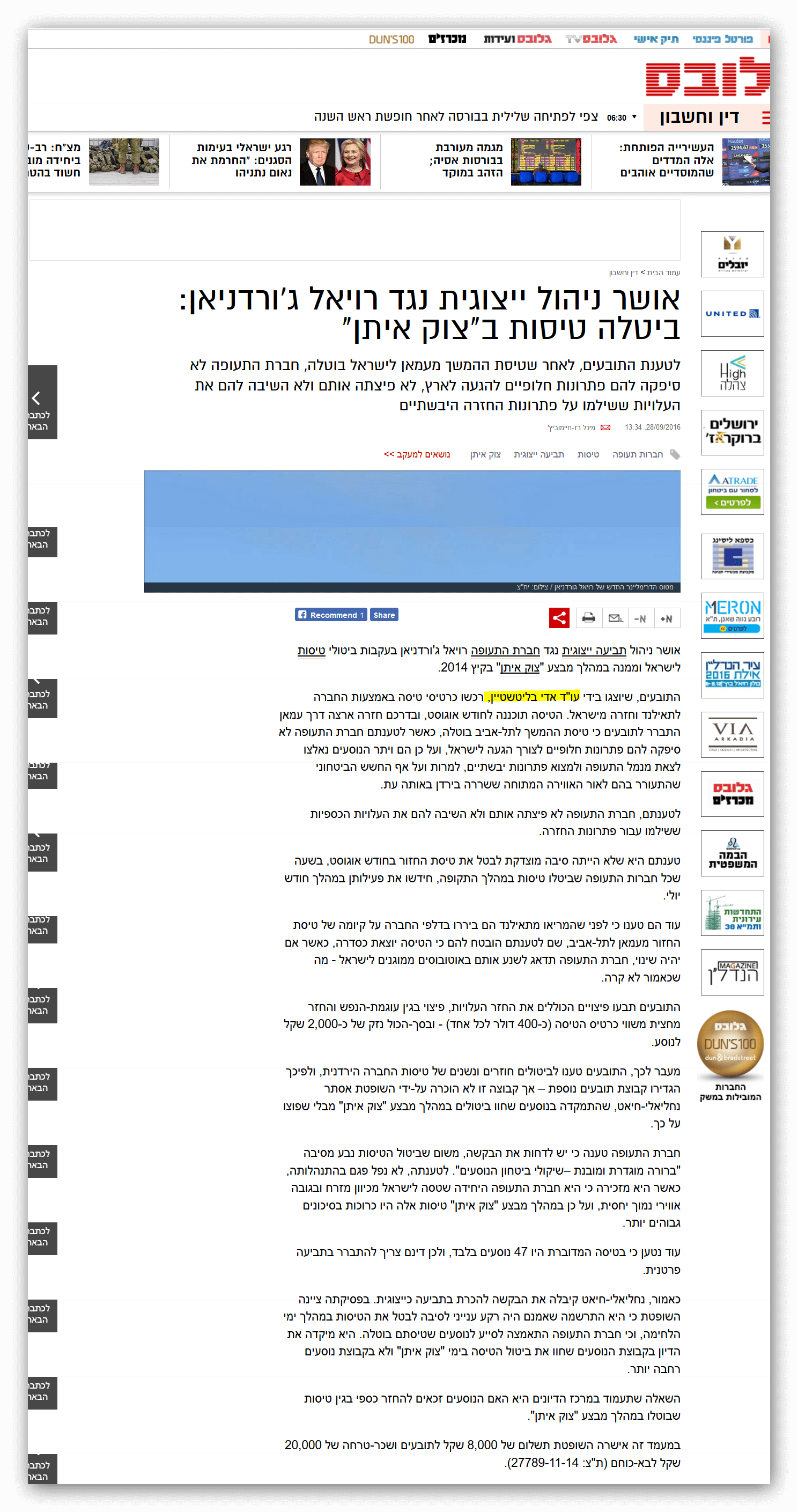
Attorney Eddie Blitstein has been representing plaintiffs for over a decade on the issue of failure to disclose in the sale of new or used vehicles. Need professional legal advice? Contact our office.
Failure to disclose in the sale of a vehicle by a private individual
Failure to provide adequate disclosure in the sale of a vehicle by a private individual may constitute deception and unethical conduct. Good faith by virtue of Contract law.
Misrepresentation is defined in Section 15 of the Contracts Law as follows:
15. מי שהתקשר בחוזה עקב טעות שהיא תוצאת הטעיה שהטעהו הצד השני או אחר מטעמו, רשאי לבטל את החוזה; לענין זה, "הטעיה" – לרבות אי-גילוין של עובדות אשר לפי דין, לפי נוהג או לפי הנסיבות היה על הצד השני לגלותן.

That is, if the seller misled the buyer into thinking that he was purchasing Fault-free vehicle Then the buyer may notify the seller of the cancellation of the contract (Canceling a transaction after selling a used car). Please note that the Contracts Law does not limit the cancellation period to 14 days after the transaction is made, and the buyer may notify the cancellation of the transaction even after a much longer period.
Section 12 of the Contracts Law defines what good faith is in negotiations, and states as follows:
12. (a) In negotiations leading up to the conclusion of a contract, a person must act in an acceptable manner and in good faith.
(ב) צד שלא נהג בדרך מקובלת ולא בתום-לב חייב לצד השני פיצויים בעד הנזק שנגרם לו עקב המשא ומתן או עקב כריתת החוזה, והוראות סעיפים 10, 13 ו-14 לחוק החוזים (תרופות בשל הפרת חוזה), תשל"א-1970, יחולו בשינויים המחוייבים.
That is, a car seller who did not act in good faith and in an acceptable manner, and did not disclose to the buyer that he was buying a vehicle with defects, may be obligated in court to pay financial compensation (sometimes very significant).
Failure to disclose in the sale of a vehicle by a used car dealer
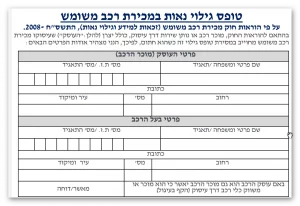
Everything written so far regarding the lack of proper disclosure in the sale of a vehicle by a private individual also applies to a vehicle dealer. In addition, used vehicle dealers are also subject to the provisions of the Used Vehicle Sales Law, which requires them to have the customer sign a Disclosure Form.
As part of the used vehicle dealer disclosure form committed Provide the customer with a number of material details, including defects in the vehicle, if the dealer sells Legally lost vehicle, what is the number of kilometers the vehicle traveled until it was sold (very relevant to the issue) Mileage fraud) and a number of other material details that may affect the buyer's decision whether to purchase the vehicle or not.
The customer's failure to sign this form is sufficient to claim that we are facing a case of failure to disclose properly in the sale of a vehicle by a car dealer.
What to do after hidden defects are discovered in the vehicle?
After the buyer has taken possession of the vehicle, it may take months, and sometimes even years, for him to discover the defect that the seller hid from him. A very common example of inquiries that come to our office is from people who purchased a vehicle in legal loss status, and only discovered this months or years later, after they decided to sell the vehicle, and the new buyer performed all the necessary tests and discovered that the vehicle was a legal loss vehicle.
Another example is situations in which the seller is aware of a significant defect in the vehicle, but instead of repairing it (sometimes for large sums of money), he chooses to sell the vehicle to another person, without disclosing the defect, so that that person will deal with the defect at his own expense.
Another example is when the buyer discovers that the mileage has been falsified. This is relatively easy to detect because there will be a significant discrepancy between the vehicle's odometer and the data on the vehicle's license or the data appearing in the vehicle's service history (each time your vehicle comes to the garage, the garage records the number shown on the odometer).
In all three cases, if the sellers had provided proper disclosure, they probably would not have been able to sell the vehicle, and certainly not at the price they were asking.
Immediately after the discovery of the hidden defect It is important not to waste time. Instead, immediately contact the seller (it doesn't matter if it's a private seller or a car dealer) and inform him that you've discovered the defect he hid from you. It's very important that the contact be made in writing (for example, on WhatsApp) or via a recorded conversation. This is a fundamental matter because you will need to prove your claims in court, and it's relatively easy to do so when you have correspondence with the seller or recorded conversations.
From your initial contact, you must demand a cancellation of the transaction. That is, return the vehicle to the seller and receive back the entire amount paid for the vehicle. It is very likely that the seller will not agree to your request, and sometimes he will not even bother to answer you.
If you paid more than 50,000 shekels for your vehicle, it is worth taking out a loan at this stage. Automotive Lawyer Which regularly deals with claims relevant to the sale/purchase of used vehicles and the issue of failure to disclose in the sale of vehicles. At this stage, it is important to build a proper action strategy to increase the chances of success of your case in court.
In cases where your vehicle cost less than 50,000 shekels, you can consider filing a small claim. Small claims court is limited to an amount of about 36.5 thousand shekels (the amount is updated slightly each year), but you will not have to hire the services of a lawyer in these cases, and you will save a significant amount of fees.
You may not have submitted yet. Claim The lawyer will recommend that you send Warning letter before taking legal action On his behalf. This letter is also not expected to lead to the cancellation of a transaction or financial compensation, but it has additional purposes, such as obtaining details that you are not aware of (or details that you have forgotten) and, if a claim is ultimately filed, it will be possible to demand Legal expenses Realistically, and claim that you did everything possible to avoid filing a claim, but in light of the seller's conduct, you were forced to file the claim and pay. Lawyer's fees, and at the end of the claim you are entitled to receive these amounts from the seller.
What may the buyer demand in a claim for failure to disclose in the sale of a vehicle?
As part of a claim for failure to disclose in the sale of a vehicle, the buyer may demand three main remedies:
- Transaction cancellation
- Financial compensation
- Refund of legal costs
Cancellation of a transaction due to lack of proper disclosure in the sale of a vehicle
When a claim is filed to cancel a vehicle purchase transaction, the amount that the buyer must claim back is the entire amount paid for the vehicle, even if the claim was filed several months or years after receiving the vehicle from the seller.
There will be judges who will decide to deduct a certain amount from the refund amount because the buyer nevertheless used the vehicle. On the other hand, there will be judges who will grant the buyer a full refund of the entire amount of the vehicle.
Financial compensation for failure to disclose in the sale of a vehicle
Monetary compensation is intended to compensate the purchaser for all damages suffered, such as: emotional distress, loss of enjoyment of using the vehicle, payments that the purchaser was forced to bear (such as payment for Vehicle repair), payments for renting a replacement vehicle, if the vehicle was damaged and not driven at all.
The plaintiff will not be able to obtain financial relief in court that is not specified in the lawsuit, so it is important to consult with a lawyer for automotive matters so that he can question you and understand from you what all the damages you have suffered.
Reimbursement of legal expenses for failure to disclose in the sale of a vehicle
The starting point is that a person who is forced to file a lawsuit, and wins his lawsuit, is entitled to receive reimbursement of legal costs. In order to increase the chance that you will receive full reimbursement of legal costs, it is very worthwhile to act as described in this article.
It is important to know that the court has the authority to award legal costs in any amount it deems appropriate, or even to award no legal costs at all, even if the vehicle buyer wins his claim.

In conclusion
Failure to disclose in the sale of a vehicle by a private individual or a car dealer is a material defect. The starting point is that the seller must disclose to the buyer any defect that he knows exists in the vehicle. Concealing defects may be accepted in court as deception and bad faith.
In addition, a used vehicle dealer is required to have the buyer sign a form called a disclosure form, in which the dealer must provide in writing material details regarding the vehicle, as stipulated in the provisions of the Used Vehicle Sales Law.
As soon as the buyer discovers a material defect in the vehicle that was concealed from him by the seller, he should contact the seller and demand the cancellation of the transaction. Most likely, the seller will refuse or even ignore the request. At this point, you should contact a car lawyer for a detailed examination of your case, and decide how to take appropriate action against the seller.
As part of a lawsuit for failure to disclose in the sale of a vehicle, the buyer may demand cancellation of the transaction, financial compensation, and reimbursement of legal expenses.
Frequently Asked Questions Regarding Failure to Disclose Properly in Car Sales
-
Can a lawsuit be filed for failure to disclose information in the sale of a vehicle?
yes.
A car seller must disclose to the buyer any defects in the vehicle.
Insofar as the seller is a car dealer, there is an obligation for the buyer to sign a disclosure form in which the car dealer must specify the details stipulated in the provisions of the Used Vehicle Sales Law. -
What relief can be obtained in a claim for failure to disclose in the sale of a vehicle?
The following remedies can be demanded and received: cancellation of the transaction (return of the vehicle to the seller and receipt of the payment made for the vehicle), financial compensation and reimbursement of legal expenses.
-
How long does a lawsuit for failure to disclose in the sale of a vehicle take?
Usually more than a year.
-
Is a lawyer needed to handle a claim for failure to disclose in the sale of a vehicle?
If the vehicle is worth more than 50,000 shekels, it is strongly recommended to hire the services of a car lawyer, otherwise your chances of success will be significantly lower (and possibly even zero).