What is a general disclosure affidavit?
תצהיר גילוי מסמכים כללי הוא תצהיר שבו בעל דין מגלה לצד שכנגד את כל המסמכים שיש ברשותו שרלוונטיים לבירור המחלוקת ביניהם בבית המשפט, ושבהם הם עשויים לעשות שימוש במהלך ההליך. מסמך שבעל הדין לא גילה במסגרת תצהיר גילוי מסמכים כללי מטעמו לא ניתן יהיה לעשות בו שימוש ללא קבלת היתר תחילה מבית המשפט (היתר שלא ינתן ללא הסבר משכנע). גישה זו מהווה את מדיניות בית המשפט והליכים אזרחיים במסגרתה "משחקים בקלפים פתוחים".
A litigant who attempts to submit to the court a document that is not disclosed within the framework of a general document disclosure affidavit on his behalf, without obtaining permission from the court, will often encounter, immediately after submitting the document, a request to remove/delete the document from the court file due to its failure to disclose it earlier.
The obligation imposed on the parties to exchange a general document disclosure affidavit only applies to claims in amounts exceeding 75 thousand shekels. (A lawsuit in ordinary court proceedings). As part of A lawsuit in a speedy trial (Claims to 75 thousand shekels) a different obligation applies and a list of all documents (note – this is not an affidavit) that the party has and that are relevant to the claim must be submitted, together with Claim שמוגש לבית המשפט.
When should a general disclosure affidavit be submitted to the opposing party?
Please note – a general document disclosure affidavit is not submitted to the court but is only exchanged between the parties.
This affidavit must be forwarded to the opposing party 30 days after the filing of the last statement of claim. The last statement of claim is Reply letter which is served on DefenseIf a response is not filed, then the affidavit must be submitted 30 days after the defense is filed.

The obligation to submit a general disclosure affidavit to the opposing party is regulated under Regulation 57. Civil Procedure Regulations, which states as follows:
No later than thirty days after the last statement of claim is filed, or at such other time as the court may direct, the parties shall exchange affidavits of discovery of documents verifying the list of all documents relating to the matters in dispute, which are or were in the party's possession or control and which the party has located after investigation and demand; if the document is no longer in his possession or control, he shall specify the circumstances relating thereto.
The opposing party may demand to review the documents specified in the affidavit of disclosure of documents.
After the parties exchange a general document disclosure affidavit, each party may demand to review the documents specified in the affidavit, and receive a copy of them.
This option is regulated within the framework of Regulation 58 of the Civil Procedure Regulations, which states as follows:
Within thirty days after the parties have exchanged affidavits of disclosure of documents pursuant to Rule 57, or at another time ordered by the court, the parties shall complete the procedures for examining the documents and each party shall allow the other party to photocopy the documents or scan them at the expense of the party who requested the examination.
Please note – even if the opposing party does not demand to review the documents, there is an obligation to independently transmit the documents. This is evident both from the regulation itself and from the Supreme Court ruling on this issue.
The sanction for failure to comply with discovery and document review procedures
The possible sanctions for failure to comply with discovery and document review procedures are set forth in Regulation 60 of the Civil Procedure Regulations, which states as follows:
A. Proper discovery and review procedures constitute a basic condition for the existence of a proper and fair judicial process; if the court finds that a litigant has not properly fulfilled his duty under this chapter, He may immediately charge him with expenses and, in special cases, even delete his statement of claims..
C. Without derogating from the provisions of Sub-regulation (a), a party who fails to disclose a document that must be disclosed or who fails to comply with a request to review a document that he has disclosed, He will not be entitled to submit the document as evidence on his behalf in that lawsuit., except with the permission of the court after it has become aware that the party to the action had reasonable justification for his omission, andIf it is a document that is detrimental to the party's case, the court may order the deletion of the statement of claim or statement of defense, as the case may be, and if it does not so order, it will order that he be charged with costs unless it finds special reasons not to do so.

According to Regulation 60, there are three options for dealing with a party who does not comply with document discovery procedures:
- The most unusual sanction (which you will almost never encounter) – deletion of a statement of claim.
- Charging legal costs – the sanction you will most likely encounter.
- Prohibition on the party from submitting the undisclosed document as evidence on his behalf – a somewhat puzzling sanction because if the party hides the document and does not disclose it, he probably did not intend to submit it to the court file in the first place.
Sample document disclosure affidavit
This is a sample document disclosure affidavit:


What to do if you want to submit a document that is not disclosed as part of a general document disclosure affidavit?
There are three options for dealing with a situation where you want to submit a document that is not disclosed as part of a general document disclosure affidavit:
Before the first pre-trial
As far as this is a stage before First sentence prefaceThe litigant must submit Request list and state his request to amend the affidavit of disclosure of documents on his behalf.
After the first pre-trial
The obligation to submit a list of requests applies to litigants only before the first pre-trial, therefore if the litigant wishes to submit a document after the first pre-trial, he must submit a request and request to amend the general document disclosure affidavit.
מצב שבו "אין מה להפסיד"
There are situations where it is known that the document that you want to attach is not disclosed in the general document disclosure affidavit, and you also know that there is no plausible explanation for the omission. In these cases, if the litigant files a request to attach the document, there is a high chance that the request will be rejected and the document will not be able to be submitted.
In these cases, the litigant can try to submit the document to the file and hope that the opposing party will not notice that it is a non-public document, and will not submit a request to delete/remove the document from the file.
Court ruling on general document disclosure affidavit
This is a sample ruling issued by the Magistrate's Court. It is not a binding precedent and examples can also be found that reached a different conclusion and result. However, it is certainly possible to learn from this ruling about the importance of a general document disclosure affidavit.
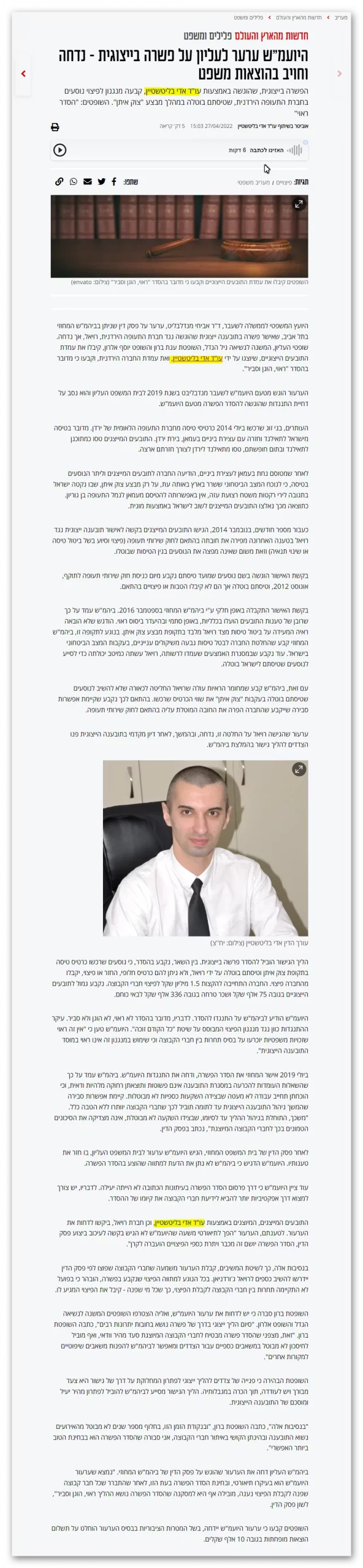
ת"א 11875-05-23 טל איתן נ' איריס אסיה (Magistrate's Court In Katzrin):
According to the request, the plaintiff attached to the affidavits submitted on his behalf documents that were not disclosed as part of the document discovery proceedings. Consequently, they cannot form part of the plaintiff's evidence and their production must be ordered.
הליכי גילוי ועיון נאותים הם תנאי בסיסי לקיומו של הליך שיפוטי ראוי והוגן. בבוא בית המשפט להידרש לשאלה האם להתיר הגשתו של מסמך כזה בשלב מאוחר יותר, על מבקש הצירוף להראות "הצדק סביר" למחדלו.
According to the defendants, The plaintiff should have notified the court that these documents were in his possession and after obtaining permission from the court to submit/attach them to the affidavit as evidence. In contrast, the plaintiff argued in his response that these documents were created after the disclosure of documents in 2024 – therefore, the duty of disclosure did not apply to them.
The duty of disclosure applies to documents that are in the possession of a party at the time of disclosure. This duty does not extend to documents that have not yet been created. Therefore, these appendices should not be removed from the affidavit. The defendants' right to investigate this matter will be preserved. In addition, their relevance to the disputes at issue in the case will be examined in the remainder of the proceedings.
Furthermore, I believe that this appendix is relevant to the questions in dispute between the parties, including the question of whether the plaintiff is the creator of the original content? Therefore, I do not believe that this appendix should be removed from the plaintiff's affidavit even if it was not disclosed as part of the discovery process, since the rule states that, if the matter is relevant, appendices or sections should not be deleted due to the fact that they were not disclosed as part of the discovery of the documents. (ראה האמור ברע"א 2778/22 אליל 2000 שיווק וניהול בע"מ נ' די. בי .אס. שירותי לווין (1998) בע"מ (2.5.2022).

In conclusion
A general document disclosure affidavit is part of the document disclosure proceedings that take place between the parties after filing a response or defense (whichever is later).
Failure to disclose a document within the framework of a general document disclosure affidavit generally means that the litigant will not be able to submit it to the court file, without obtaining permission from the court, which will examine the reason for the failure.
In extreme cases, failure to submit a general document disclosure affidavit and failure to conduct preliminary proceedings will lead to the deletion of the pleadings of the party who has not fulfilled his obligations according to the Civil Procedure Regulations.