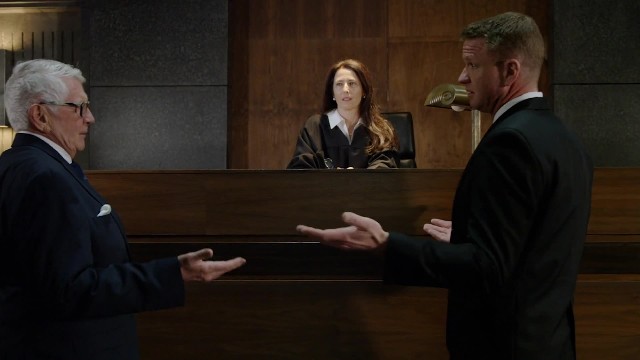
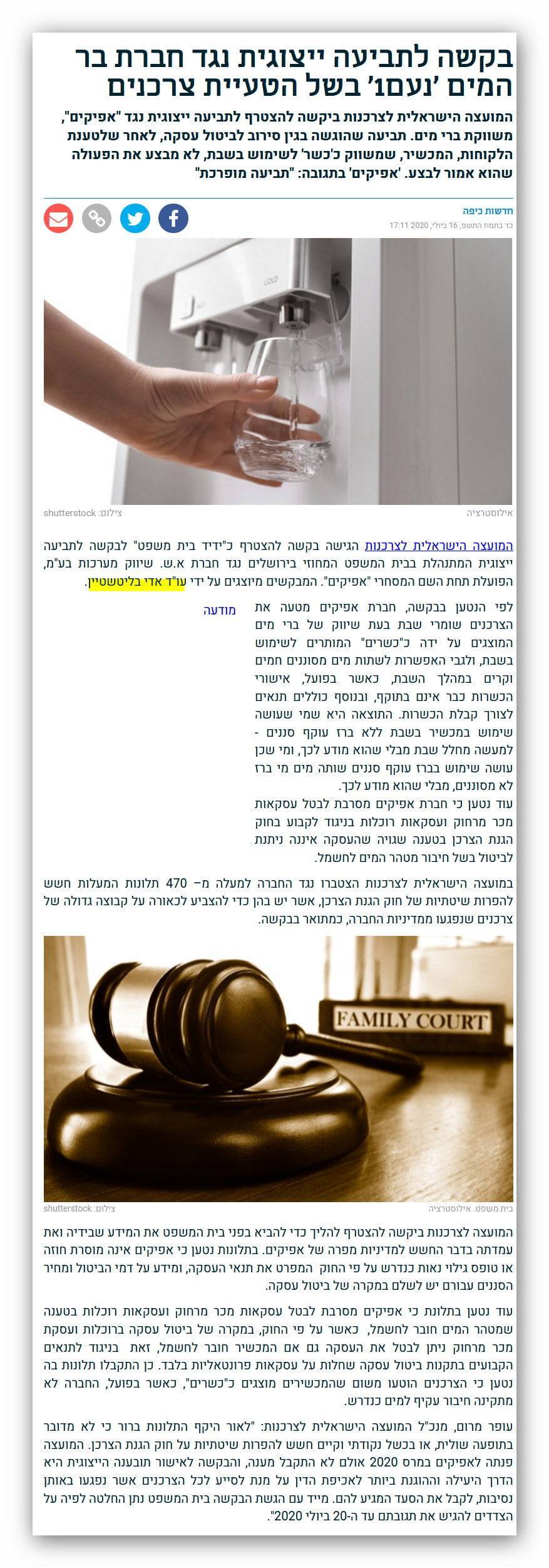
An evidentiary hearing (or evidentiary hearing) is the most important hearing in any civil or Financial claimThis is a discussion that usually takes place after at least two discussions. Pre-trial, in which the judge tries to simplify the dispute and mediate between the parties in order to reach an agreement To compromise.
During an evidentiary hearing, the parties' evidence is received and the plaintiff's and defendant's witnesses are heard. Evidence not received during this hearing or a witness not heard during this hearing will not be part of the case and the verdict cannot be based on them, unless submitted. Separate request And the court will approve the presentation of evidence or the hearing of the witness separately.
An evidentiary hearing is usually the longest hearing and in complex cases can last more than one day. In most cases, this hearing will last several hours, and usually before the hearing the judge will determine how much time is allotted for hearing or questioning each witness. This matter is regulated under Rule 64. Civil Procedure Regulations Which states as follows:
(A) After the concluding pre-trial meeting, a hearing will be held at a time ordered by the court, during which the parties' evidence will be presented.
(on) The hearing in the proceeding in which the hearing of evidence began will be held consecutively and the continuation of the hearing at a postponed date will be held within a few days, unless the circumstances of the case require otherwise; in this regard, the court must ensure, as a rule, that cross-examination of a witness will be conducted immediately and following his examination-in-chief.
The purpose of the evidentiary hearing is to convince the judge to accept the claims of the plaintiff or defendant, and each party tries to show the judge that the other party's claims are incorrect or even false.
התובע ועדיו מעידים ראשונים במסגרת דיון הוכחות, ואחריהם מעידים הנתבע ועדיו. עורך דינם של כל אחד מהצדדים מחליט מי מעיד ראשון. לדוגמה: אם לתובע יש 5 עדים ניתן להעיד קודם אותם ורק לאחר מכן להעיד את התובע. כנ"ל לגבי הנתבע.
Tactical considerations are important in an evidentiary hearing, and deciding who to call to testify and at what stage may be critical to trying to win the trial.
Claims lawyer Eddie Blitstein explains the evidentiary hearing
Submission of affidavit of primary witness or primary investigation
As explained earlier, in an evidentiary hearing, the plaintiff and his witnesses testify first, followed by the defendant and his witnesses. However, giving testimony and presenting evidence does not always have to be done through oral testimony.
Regarding the manner of presenting evidence or hearing witnesses, Regulation 67 of the Civil Procedure Regulations states as follows:
(A) The court will decide whether the main testimonies will be heard orally or in writing; in its decision regarding the manner in which the testimonies will be heard, the court will consider, among other things, the scope of the written and oral evidence, the complexity of the claim and the nature of the conflict between the parties, while giving priority to hearing oral testimonies, if this will help to uncover the truth and conduct the hearing effectively.
(A1) If the court orders the submission of written primary testimony, and the party has not submitted a witness affidavit as aforesaid, the court may, without derogating from its other powers, order that the party shall not be permitted to bring the witness or prove the fact, unless the court is satisfied that the affidavit was not submitted for justified reasons.
(on) Without derogating from the provisions of Sub-regulation (a), in a claim for financial relief in a district court in an amount exceeding two and a half million new shekels and in a claim for compensation for bodily injury and a claim based on the Compensation for Road Accident Victims Law filed in the district court, priority will be given to providing written testimony if this will assist in discovering the truth and in the efficient conduct of the hearing.
(third) לאחר שהוזהר העד כדין, בעל הדין שזימן את העד יחקרוהו בחקירה ראשית ובעל הדין שכנגד רשאי לחקור את העד בחקירה נגדית; בעל הדין שזימן את העד רשאי לחזור ולחקור אותו בחקירה חוזרת, לגבי עניינים הנובעים מהחקירה הנגדית שנותרה לגביהם אי-בהירות; לעניין תקנת משנה זו, "בעל דין שכנגד" – כל בעל דין המצוי בחזית מחלוקת מהותית עם בעל הדין שזימן את העד או שבית המשפט התיר לו לחקור את העד בחקירה נגדית.
Conducting an evidentiary hearing in court
Affidavit of first witness
An evidentiary hearing can be conducted on the basis of a primary witness affidavit submitted on behalf of the plaintiff and defendant, and the witnesses on their behalf. Affidavit of first witness It is a document that details the testimony of the relevant party or witness, and to which all evidence relevant to that party or witness is attached.
The purpose of filing a deposition before an evidentiary hearing is to save time in questioning the party or relevant witness by his or her attorney. If a deposition has been filed, the party or witness will only be questioned by the opposing party's attorney (Cross-examination).
The new Civil Procedure Regulations state that the default in an evidentiary hearing is to hear the parties or witnesses orally and not through the submission of witness affidavits, but this is a decision that is at the discretion of the court, which may order the submission of witness affidavits, especially in complex cases.
A party or witness who has not submitted a primary testimony affidavit, despite the court's decision, may not testify in an evidentiary hearing without obtaining the court's approval. Unless there is a particularly convincing explanation for the failure to submit the affidavit, the court will not permit the testimony to be given in these circumstances.
Primary investigation
Within each evidentiary hearing, there are several types of investigations:
Primary investigation – An investigation in which the litigant Questioned by his lawyerThe purpose of the main examination is to present the testimony of the party or the witness on his behalf to the court, and to present the evidence that may support the claims. During the main examination, a lawyer may only ask open-ended questions (for example: Tell me what happened on a certain date).
Cross-examination – As part of an evidentiary hearing, the lawyer may question the client or witnesses. The other sideThe purpose of cross-examination is to refute the testimony or evidence of the opposing party. The lawyer may ask closed questions (questions that can be answered with a yes or no) or open questions.
Re-investigation – Re-examination is not necessary in every evidentiary hearing, and its entire purpose is to allow the lawyer to question the His client or witnesses on his behalf Questions aimed at clarify An issue that was raised as part of cross-examination, and was not clear.
If the court has determined that a primary investigation must be conducted as part of an evidentiary hearing, this is a sign that the court does not see any particular complexity in the lawsuit, and in most cases, in these cases, the court will set a relatively short period of time for the primary investigation.
During a preliminary investigation, the party or witnesses on his behalf must provide as much information as possible that can help them prove their claims, but it is very important that the lawyer conducts a preparatory meeting with his client so that the client knows how to answer questions correctly and how to provide the relevant information and filter out irrelevant information, which may even harm him if he refers to it during an evidentiary hearing. This is one of the reasons why it is very important to enlist the services of experienced litigation lawyers to properly prepare the client.
Need legal assistance during an evidentiary hearing? Contact Attorney Eddie Blitstein
At the end of the evidentiary hearing – summaries
At the end of each evidentiary hearing, the parties must summarize their arguments. The summary of arguments can be done orally or in writing. If the court expects the parties to summarize orally, it is usually a sign that the dispute is relatively simple.
In the summary, the parties must state all their claims and address what is alleged in the summary. Claim or Defense, affidavits of the main witness, the testimonies of the parties, the evidence submitted, omissions of the parties throughout the entire procedure.
A litigant who does not reiterate in the summary a claim that he made in one of his letters of claim throughout the proceedings is considered to have waived the claim.
In conclusion
The evidentiary hearing is the most important hearing and will always take place after more than one pre-trial hearing. This hearing will always be the longest, and in complex cases will take place over more than one day, but is usually a hearing that lasts several hours.
During an evidentiary hearing, the parties try to convince the judge to accept their version, and at the same time they try to refute the opposing party's claims.
An evidentiary hearing can be held on the basis of primary witness affidavits or through primary, cross-examination, and re-examination.
User rating:
5 / 5. 55
No votes so far! Be the first to rate this post.
We are glad to know that the article was helpful to you.
Follow us on social media!
We are sorry that this post was not useful for you!
He has extensive experience and proven success in complex civil and financial lawsuits against the most powerful and largest entities in Israel and abroad.
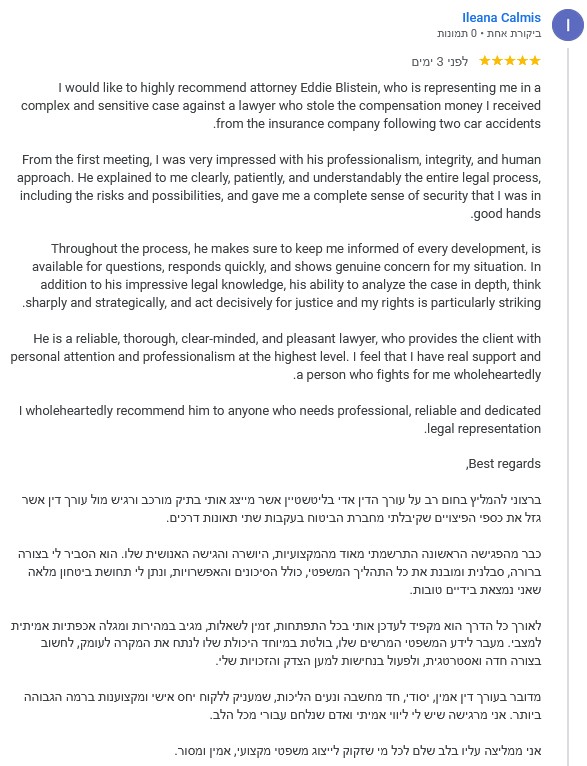
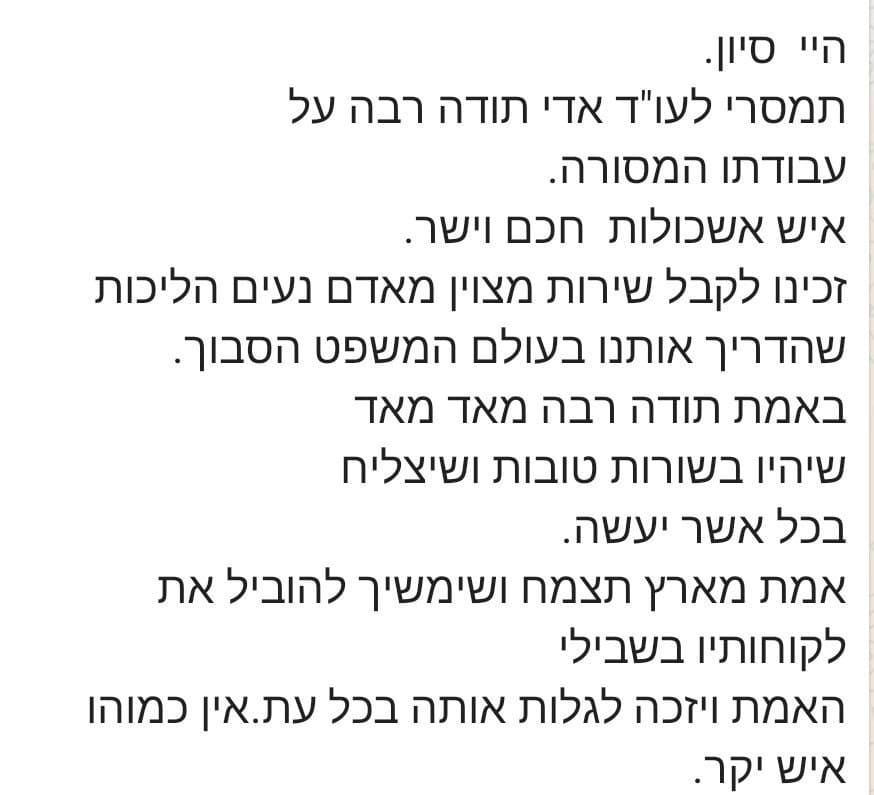
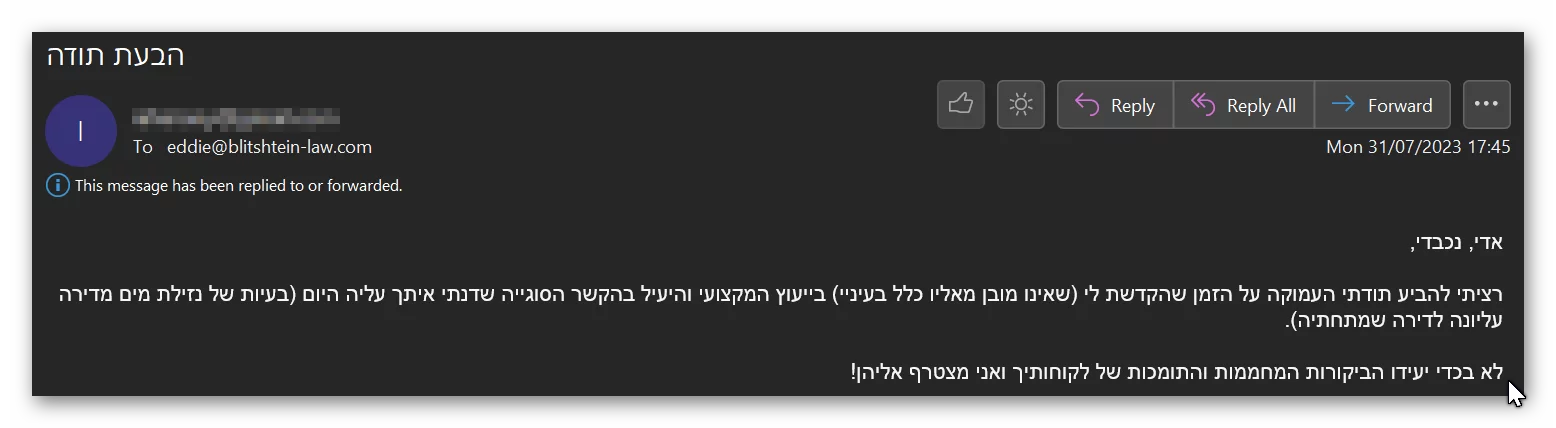
You can read many recommendations from previous clients of the firm and articles about us in the media at the bottom of the page.
Our firm provides the highest level of legal services to companies and individuals, in Hebrew, English and Russian.
Attorney Eddie Blitstein represents plaintiffs and defendants only in claims in amounts exceeding NIS 100,000.
Our office does not accept clients who wish to pay a fee based on percentage or success.