מהי ה"חזית" ומדוע הרחבת חזית בעייתית?
Claim מפרט את טענותיו של התובע והוא אמור מלכתחילה להתייחס לטענות החשובות ביותר. ניתן לומר שכתב התביעה הוא שקובע את ה"חזית" והנתבע הוא זה שמגיב לטענותיו של התובע בהתאם ל"חזית" שנקבעה על ידו.
לעיתים נוצר מצב במסגרתו בעל הדין מעוניין "לשפר עמדות" ולפתע ניתן לגלות במסגרת Affidavit of first witness or Summaries מטעמו של בעל הדין טענות חדשות שלא נטענו על ידו בכתב טענותיו. טענות חדשות אלה נקראות בשפה המשפטית "הרחבת חזית" או "שינוי חזית".
In other words, the party expands the scope of the dispute and adds new details to it that were not previously alleged by him. Hence the problem – expanding the scope may fundamentally change the procedure because suddenly the party adds new details that were not previously alleged by him, which may change, or may change, the entire dispute. When the already submitted Defense The dispute between the parties became more serious and they were prohibited from attempting to improve their claims.
A plaintiff who did not write important facts in his written claim may submit Request to amend a statement of claim Thus avoiding the issue of expanding the front. The disadvantage of such a request is that it is not always accepted and if the request to amend a statement of claim is accepted, it may lead to the plaintiff being charged legal costs (because the defendant will be forced to file an amended statement of defense).
How can you deal with a facade expansion or facade change?
It is not difficult to deal with a front extension or front change. In practice, all you need to do is object to the existence of a front extension or front change at the first opportunity it is made (and make sure that this objection is explicitly recorded in the minutes of the hearing or appears explicitly in your pleadings). The real difficulty in dealing with a front extension or front change is discovering it. Litigation parties and their lawyers do not always remember exactly what is written in the pleadings and sometimes do not object to a new claim because they simply do not notice that it is a new claim.
For this reason, it is always important to be vigilant and to be well acquainted with the content of the pleadings. A party who does not object to the opposing party's attempt to expand a frontage or change a frontage is considered to have agreed to the new claims.

Is expanding the front relevant only to the plaintiff or only in relation to the statement of claim?
Expansion of the frontage is not relevant only to the plaintiff. This claim can also be made by a defendant.
An extension of the front can be made at any stage after the filing of the statement of claim. For example: An extension of the front can be made through oral argument (for example, during the pre-trial period) or as part of a witness affidavit. The front can even be extended in the summary (this is the last stage before a decision or verdict is issued).
Supreme Court rulings regarding the expansion of the front
There is extensive Supreme Court ruling on the matter. Legal claim this.
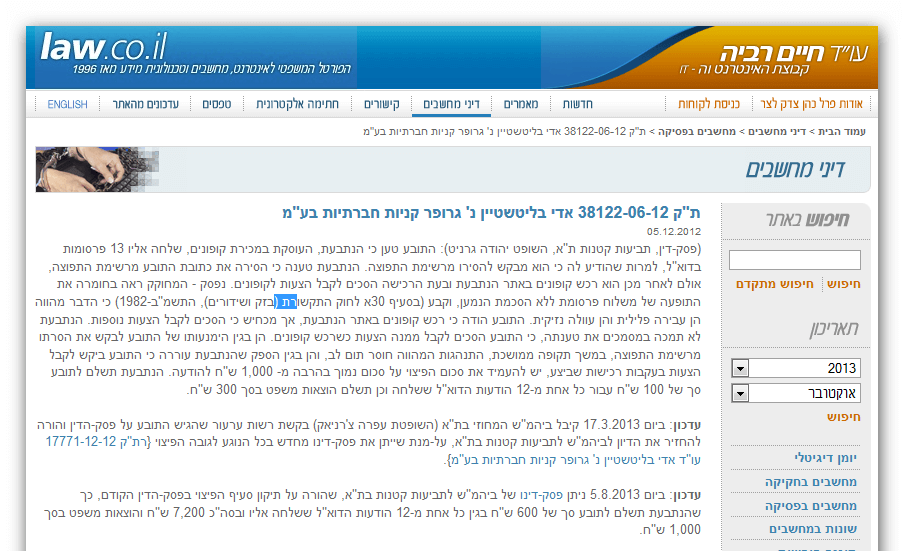
רע"א 5127/06 נעאגה עמרן נ' האפוטרופס הכללי כמנהל נכסי ההקדש (החלטה מיום 30.8.2006):
The rule is that the parties determine the list of issues to be discussed, and this list defines the issues that the court will discuss. The trial and the discussion may not be expanded to combined questions of fact and law, which were not included in that list, unless the opposing party has expressed, expressly or implicitly, his consent to conduct the trial in a manner that deviates from what was defined in the list. (ראו ע"א 1270/02 עיריית רמת-גן נ' מנחמי בוני מגדלי דוד רמת-גן בע"מ, פ"ד נח(2) 7, 10-11 והאסמכתאות שם).
Such consent does not exist in the case before us, since, as stated in the District Court's ruling, When the applicant's attorney attempted to mention during the hearing the protected tenancy ground under Section 23(b) of the Law, the respondent objected to the change of front. As stated, the court's role is to rule on the dispute between the parties, as they see it, and as a general rule it is not its role to create a new dispute and decide on it. (ראו: ע"א 536/89 פז חברת נפט בע"מ ואח' נ' גד לויטין, פ"ד מו(3), 617, עמ' 625-626).
אם סבר בית המשפט כי מן הצדק ולשם חשיפת האמת יש לדון בסוגיה החדשה של המשכיות המשיב בניהול הבניין כ"בית עסק", הרי שהיה מקום כי יידע את הצדדים במפורש בעניין ויאפשר להם לטעון בסוגיה בטרם יכריע בה.
ע"א 8871/07 יודפת מושב עובדים להתיישבות חקלאית בע"מ נ' נגוהות בע"מ (פסק דין מיום 12.7.2011):
The parties shape the conventions and the issues that are up for discussion within the framework of the pleadings they have submitted. As a general rule, the parties are prohibited from changing the scope of the disputes they have outlined in their pleadings, unless they have received prior permission to do so from the court. (ראו: תקנות 91 ו-92 לתקנות סדר הדין האזרחי, התשמ"ד-1984 (להלן: התקנות)), or when the opposing party has agreed to the change of front, expressly or impliedly …
From a procedural point of view, the prohibition on changing the front requires adherence to the definition of the questions in dispute and leads to an efficient and focused legal discussion. From a substantive point of view, this prohibition protects the litigant, and in particular the defendant, from miscarriage of justice, by allowing him to properly prepare for a factual and legal confrontation with the issues arising from the pleadings…
…
It is worth noting here that even if it were proven that Yodfat raised the alternative argument at the summary stage in the district court, this would not have benefited her in this case. When a litigant only claims the existence of an alternative cause of action at the summary stage (even assuming that his opponent does not claim a change of front) – then raising the claim at this time may be excessively late, certainly to the extent that no evidence was presented during the hearing to substantiate it. This is the situation here.
ע"א 1653/08 סמיון לפיץ נ' בנק לאומי לישראל בע"מ (פסק דין מיום 14.7.2011):
The core of the dispute between the parties revolves around the issue of expanding the appellant's front in the district court. Although this claim is deliberative in nature, it carries great weight. This is in view of the adversarial system used in Israeli law, and even more so in civil proceedings. In the latter, it is the parties who define the parties. This is especially true with regard to the plaintiff, who not only opens the proceedings, but actually creates them according to the boundaries in his statement of claim.
…
There is also concern about a situation in which, in the absence of the rule regarding changing the front, parties will defend themselves against a claim that was not even raised against them, and thus the plaintiff may be granted an unfair advantage, benefiting from the creativity of his friend.
The district courts are also careful to apply this legal argument. For example, in the framework of Request for approval of a class action lawsuit ת"צ 31171-02-18 ראם בן אור נ' חברת דואר ישראל (החלטה מיום 15.8.2021):
The respondent's claim must be rejected, both from a procedural and evidentiary perspective. The claim for the defense of Section 15 of the Torts Ordinance was not raised in the respondent's response nor in her supplementary response, and was raised for the first time in her brief (the last document submitted to the case). Under these circumstances, it is not only a matter of changing the face but also of a claim that the applicant was not given any opportunity to respond to it. This is sufficient to order its rejection.
ת"א 65403-11-19 ברק אברמוב נ' באוהאוס בע"מ (החלטה מיום 10.3.2021):
The prohibition on expanding the front is not technical but rather substantive and reflects important principles of streamlining the discussion and its finality. [ראו רע"א 282/06 עיריית ירושלים נ' שירותי בריאות כללית [פורסם בנבו] (31.12.06)], This prohibition also applies to the possibility of expanding the scope of the main witness affidavits submitted by a party. [ראו רע"א 6995/16 א. דורי בנייה בע"מ נ' נתיבי דרום בע"מ [פורסם בנבו] (6.11.2016)].
…
Even if his claim is accepted, that in another proceeding he made different factual claims, this does not change the fact that in the proceeding in question and as detailed above, theAnd various factual allegations were raised in the statement of claim and in the affidavit, and therefore constitute a change of face, the way to which is through amendment. Statement of Claims or obtaining the other party's consent to the change.

Frequently asked questions about expanding the frontage
-
What is a front extension? (in simple terms)
An extension of the front is a situation in which a party asserts different/new factual claims than what they previously asserted. An extension of the front is usually made because that party is trying to improve their version or correct an error.
-
How should I resist expanding a front?
Objection must be made orally or in writing. At the first opportunity In which an attempt is made to expand the facade.
-
What happens if the court receives an objection regarding the extension of a frontage?
The court may order a party who has expanded a front to amend its pleadings and order it to pay legal costs. The court may also determine that there is no need to amend the pleadings but will ignore the new claims.
-
What happens if I did not object to the expansion of the front?
Anyone who did not object is considered to have agreed to discuss the new/additional claims.