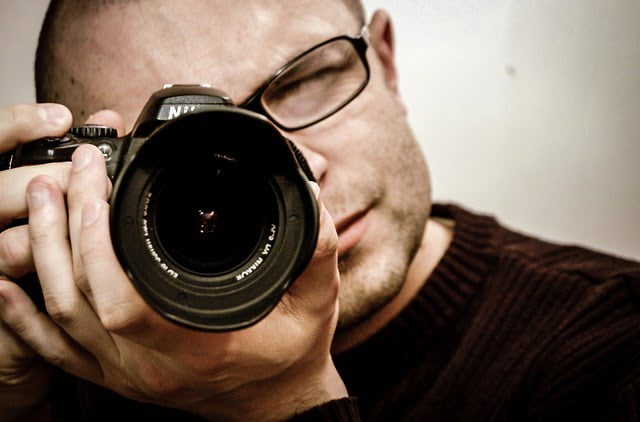
A lawsuit for taking a photo without permission can lead to a situation of violation of the privacy of the person photographed who does not want to be photographed at all or does not want his or her photo to be published in public. In many cases, a lawsuit for taking a photo without permission may lead to very significant financial compensation, so both the photographer and the person photographed must know their legal rights in order to avoid legal proceedings following the publication of a photo without permission.
In what cases can a lawsuit be filed for taking photos without permission?
סעיף 2 לחוק הגנת הפרטיות מגדיר מהי "פגיעה בפרטיות". מדובר בפעולות רבות מאוד שמתייחסות למצבים שונים שאינם רלוונטיים בהכרח רק למצבים של צילום המהווה פגיעה בפרטיות, ולכן לא נתייחס אליהם במאמר זה.
These are the situations relevant to violating privacy by publishing a photo without permission:
2. A violation of privacy is one of the following:
* Photographing a person while in private possession;
* Publishing a person's photograph in public under circumstances where the publication is likely to humiliate or demean him;
* פרסום תצלומו של נפגע ברבים שצולם בזמן הפגיעה או סמוך לאחריה באופן שניתן לזהותו ובנסיבות שבהן עלול הפרסום להביאו במבוכה, למעט פרסום תצלום בלא השהיות בין רגע הצילום לרגע השידור בפועל שאינו חורג מהסביר באותן נסיבות; לעניין זה, "נפגע" – מי שסבל מפגיעה גופנית או נפשית עקב אירוע פתאומי ושפגיעתו ניכרת לעין;
*Publication of a matter concerning the privacy of a person's personal life, including their sexual past, or their health status, or their behavior in private.
What all of these situations have in common for which a lawsuit can be filed for unauthorized photography is that they may embarrass, humiliate, or degrade the person photographed. In these cases, it is certainly possible to assume that if the person photographed had been asked whether they consented to being photographed, their answer would most likely have been no. An example of this is the publication of a photo without permission in which the person photographed is captured by the camera lens in an intimate situation. These situations can even escalate into situations of sexual blackmail, as the person photographed will agree to do almost anything so that their photos do not become public. Countless publications can be found in the media on these topics.

It is important to know that the sections of the law mentioned so far refer to the situation of Invasion of privacy In relation to a living person. However, a privacy protection lawyer who is well-versed in the provisions of the law will reveal to you that the law also refers to situations of violation of privacy in relation to a deceased person, and in these situations too, a lawsuit can be filed for photography without permission.
In this regard, Section 2A of the Privacy Protection Law states as follows:
(a) For the purposes of this law, the public publication of a photograph of a human body exposed in a manner that allows identification is also considered a violation of privacy, unless one of the following has occurred:
(1) That person consented during his lifetime to the said harm;
(2) 15 years have passed since the date of that person's death;
(3) Consent to such harm was received from the first of those specified in subparagraphs (a) to (d), who is still alive, provided that the deceased did not object during his lifetime to such harm and his child or parent did not notify the publisher or another person on his behalf that he objects to the publication:
(a) his spouse;
(b) all his children;
(c) his parents;
(d) all his brothers;
(4) The deceased had no relatives listed in paragraph (3) and the court approved the publication.
(b) The spouse, child, parent or sibling of a deceased person may file a civil lawsuit for publication under this section.
It is important to understand that these sections of the law do not prohibit any photography or publication of a photo without permission. A photo taken on the street (a public place) in which other people are visible and does not, for example, show a naked person or a person in an intimate situation – there is no reason to publish it publicly, and such a photo will not be considered an invasion of privacy.
What to do before you rush to file a lawsuit for taking photos without permission?
Before running to the court clerk's office to file Claim For photography without permission, you need to do some preparatory work. It is always important to remember that it is very easy to submit Financial claim or Civil lawsuit, but it is much more difficult to convince the court to accept the lawsuit and rule in your favor for significant financial compensation following the publication of a photo without permission.
The most important thing to prove in a lawsuit for unauthorized photography is that such a photograph was actually published. For this reason, the first thing you should do as soon as you encounter a photo of yourself published without your permission is to take a screenshot so that it is clear where the publication took place, exactly when, and who made the publication.
Also, if an unauthorized photo was posted in a Facebook group, it is important to document the size of the group (how many members/users are in that group). The greater the exposure of the offensive post, the greater the likelihood of receiving significant financial compensation.
Another thing you should do is immediately contact the person who posted the ad and ask them to remove it. If the advertiser refuses, this may increase the amount of compensation after filing the lawsuit.
What is the amount of compensation that can be claimed in a lawsuit for taking photos without permission?
The amount of financial compensation that can be claimed in a lawsuit for unauthorized photography is set out in Section 29A of the Privacy Protection Law, which states as follows:
29A. (a) If a person is convicted of an offense under Section 5, the court may order him to pay the injured party compensation not exceeding 50,000 New Shekels, without proof of damage; an order for compensation under this subsection is as if it were a judgment of the same court given in a civil action by the entitled party against the person liable for it.
(b) (1) In a civil tort trial under Section 4, the court may order the defendant to pay the injured party compensation not exceeding 50,000 New Shekels, without proof of damage;
(2) In a trial as stated in paragraph (1) in which it is proven that the violation of privacy was committed with the intention to harm, the court may order the defendant to pay the injured party compensation not exceeding double the amount as stated in that paragraph, without proof of damage.
(c) A person shall not receive compensation without proof of damage under this section, for the same violation of privacy, more than once.
(d) The amounts mentioned in this section will be updated on the 16th of each month, in accordance with the rate of change in the new index compared to the basic index; for this purpose –
"מדד" – מדד המחירים לצרכן שמפרסמת הלשכה המרכזית לסטטיסטיקה;
"המדד החדש" – מדד החודש שקדם לחודש העדכון;
"המדד הבסיסי" – מדד חודש מאי 2007.
This section establishes several important provisions:
- As of today, a claim for violation of privacy can be filed for a little over 65,000 shekels (after indexation). Without proof of damage.
- To the extent that the offensive advertising was done with the intention of causing harm, double compensation can be demanded, in an amount that currently stands at a little over 130,000 shekels, without proof of damage.
- You cannot be sued more than once for posting a photo without permission (for example, if the advertiser posted the same offensive photo multiple times in the same Facebook group).
Lawsuit for taking photos of a minor without permission
סוגיית צילומו של קטין אינה מוסדרת בחוק הגנת הפרטיות אלא במסגרת הוראות חוק הנוער (טיפול והשגחה), תש"ך-1960. חוק זה מאפשר לבית המשפט להטיל אפילו עונשי מאסר על מפרסם תמונות של קטינים במצבים הקבועים בסעיף 24 לחוק (סעיף שכותרתו הגנת קטין מפני פרסומים מזיקים).
This section states as follows:
(A) אלה דינם מאסר שנה אחת או קנס כאמור בסעיף 61(א)(4) לחוק העונשין, התשל"ז-1977 (להלן – חוק העונשין):
(1) Whoever publishes the name of a minor or anything else that may lead to the identification of a minor, either by the general public or by his close circle, or to imply his identification as aforesaid, whether through the publication of his voice, his image, in whole or in part, his surroundings or figures close to the minor, or in any other way, in a manner or under circumstances that may reveal one of the following:
(A) The minor was brought before a court;
(on) A social worker under the Youth (Care and Supervision) Law acted or is acting regarding the minor under this law;
(third) The minor attempted or committed suicide;
(d) Something that could lead to a minor being accused of a crime or immorality;
(the) The minor is a family member of a person accused of a crime or immorality, however, this does not prevent the publication of the image of an adult accused of a crime;
(and) נעברה בקטין עבירת מין, עבירת אלימות, עבירה של התעללות, או שנעברה בו עבירה בידי האחראי עליו כמשמעותו בסעיף 368א לחוק העונשין, למעט לעניין קטין שהוא נפגע תאונת דרכים או פגיעת איבה, כהגדרתן בחוק לתיקון דיני הראיות (הגנת ילדים), התשט"ו-1955, או מעשה טרור, או עד להם;
(and 1) The minor is a suspect, defendant or witness in a criminal trial or is a party or witness in another trial related to an offense under sections 208, 214, 345 to 352, 368C, 374A or 377A(5) to (7) of the Penal Law;
(G) Something that links a minor to testing for HIV;
(H) Something that links a minor to psychiatric examination, treatment, or hospitalization;
(ninth) Nothing concerning the health, physical or mental condition of a minor in a legal proceeding, except for something the disclosure of which does not constitute a real violation of the minor's privacy;
(2) The person who publishes a nude photo of a minor who has turned 5 years old and there is something in the publication to identify him.
(A1) In this section –
"קטין" – קטין הנמצא בישראל או שמקום מושבו, כמשמעותו בחוק הכשרות המשפטית והאפוטרופסות, התשכ"ב-1962, הוא בישראל;
"בן משפחתו" – ילדו, אחיו, אחותו, נכדו או נכדתו.
(on) For the purposes of this section, it is immaterial whether the minor or the person responsible for him or her consented to the publication or not.
According to this section, a lawsuit can be filed for taking a photograph of a minor without permission in the cases specified in that section. It is important to know that there are also exceptions stipulated in section 24A of the law, which states as follows:
Section 24 shall not apply to publication permitted by the court and to publication as stated in paragraph (1) of section 24(a) made by or on behalf of the police for the purpose of investigating offenses, investigating a death or searching for missing minors when publication cannot be avoided.

In conclusion
A lawsuit can be filed for taking a photo without permission in the same situations as those set forth in the Privacy Protection Law. On the other hand, a lawsuit cannot be filed for taking a photo without permission if the photo was taken in a place where the person photographed has no reason to think that they will enjoy privacy (for example: in a public place), as long as the photo does not present the person photographed in a derogatory or humiliating manner. Not every publication of a photo without permission gives rise to a lawsuit.
A lawsuit for taking photos without permission can lead to very significant financial compensation. Currently, this is compensation of up to 65,000 shekels without proof of damage, and in situations where there was intent to harm, double compensation can be claimed.
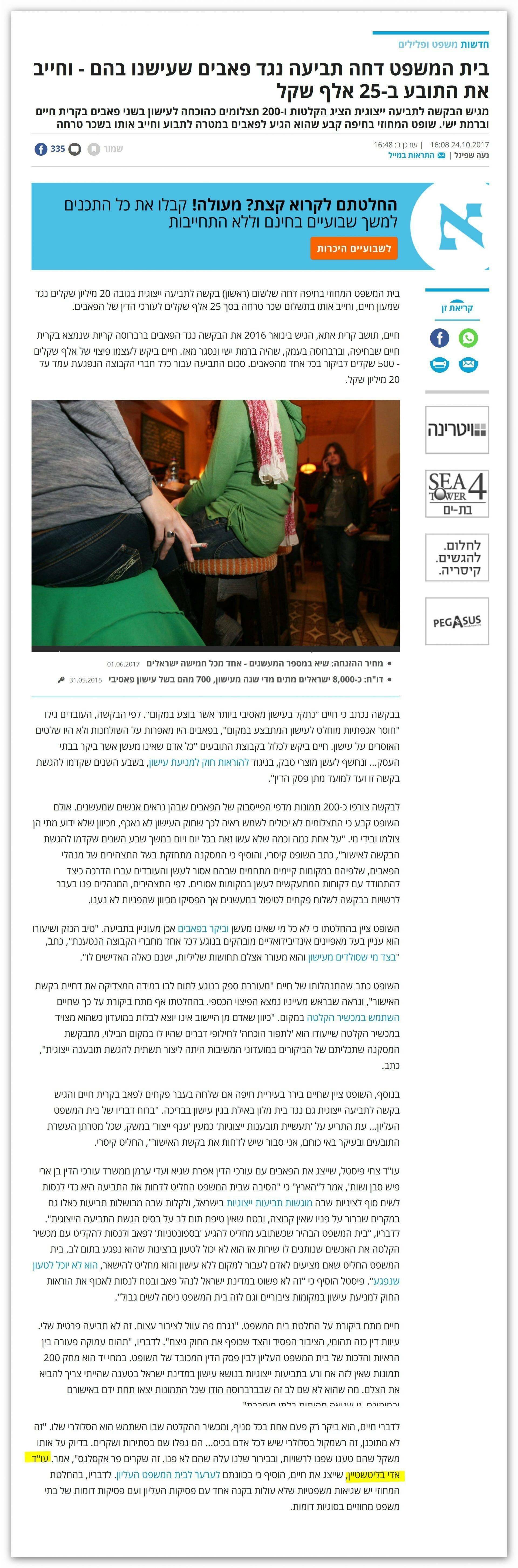
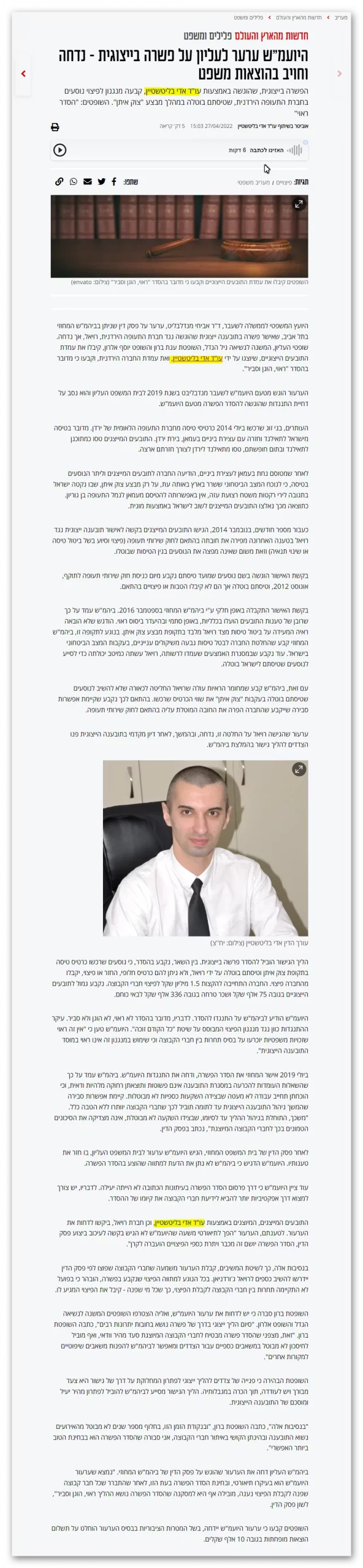
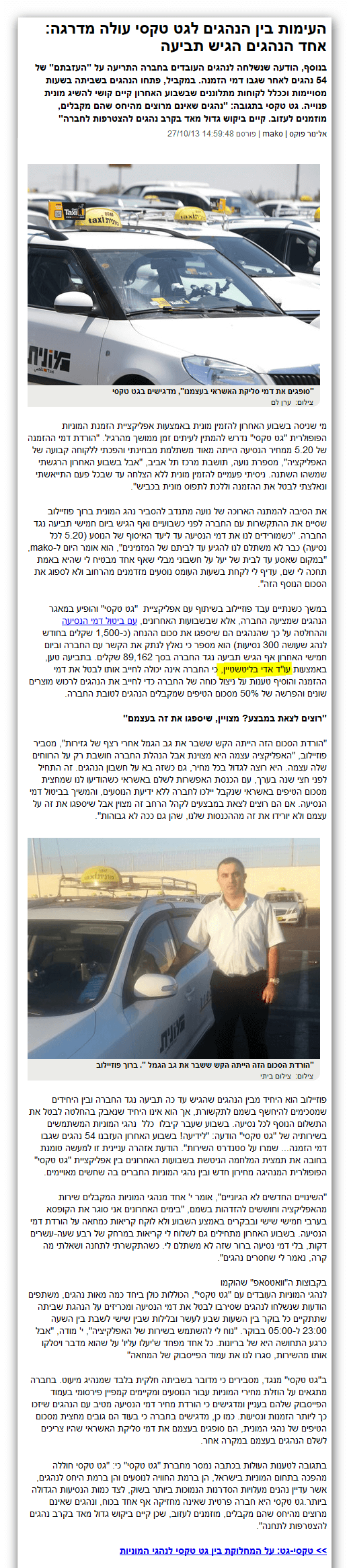
It is highly recommended to consult with privacy protection lawyer Eddie Blitstein before filing a lawsuit for unauthorized photography.
Frequently Asked Questions Regarding a Claim for Unauthorized Photography
-
How much financial compensation can be received in a lawsuit for taking photos without permission?
Privacy Protection Law Currently, it is possible to claim financial compensation of up to 65,000 shekels without proof of damage.
If the offensive advertising was made with the intention of causing harm, double compensation can be demanded (approximately 130,000 shekels without proof of damage). -
How long does a lawsuit for taking photos without permission take?
Typically, a lawsuit for unauthorized photography lasts for over a year. The defendant usually has an interest in prolonging the lawsuit as long as possible because as long as it cannot be verdictThe defendant owes the plaintiff nothing.
-
What is the fee required to file a lawsuit for unauthorized photography?
גובה שכר הטרחה משתנה ממקרה למקרה בהתאם למורכבות שלו. בדרך כלל שכר הטרחה לא יפחת מ-15 אלף ש"ח בתוספת מע"מ.
-
Is it possible to pay for handling a claim for photography without permission based on percentage/success?
not.