What is statute of limitations?
Statute of limitations is a legal claim that aims to prevent or cancel a lawsuit from occurring. Civil lawsuit or criminal proceedings filed against a person or company.
על פי טענת התיישנות, לאחר שחלף פרק הזמן הקבוע בחוק ההתיישנות, תשי"ח-1958, לא ניתן לנהל עוד הליך כלשהו, גם אם נגרם לנפגע נזק משמעותי מאוד. תיאורטית התובע יוכל להגיש את התביעה לבית המשפט, אך אם הנתבע יטען At the first opportunity If the cause of action has become time-barred, the court orders the dismissal of the action.
It is important to know that the statute of limitations is not uniform and varies depending on the relevant case/field. For example: in a claim not related to real estate – the cause of action will expire after seven years. In contrast, in issues related to real estate, the cause of action will expire after 15 years, and in some cases even after 25 years.
For example: Shlomi lent my father one million shekels in 2010 and it was agreed that my father would repay the money within a year (2011). If my father does not repay the money and Shlomi does not file the lawsuit by 2018 (seven years after 2011), the lawsuit will become statute-barred and even if Shlomi files a lawsuit against my father after 2018, the lawsuit will be Reject outright Due to obsolescence.

In what cases will the claim of limitation apply?
First, in order for a claim of limitation to be accepted in court, the defendant must raise this claim at the first opportunity. This matter is determined in Section 3 of the Law, which states as follows:
There is no need to claim limitation if the defendant did not assert this claim at the first opportunity after filing the claim.
If the defendant does indeed claim that the cause of action has become time-barred, the court will dismiss the claim. The matter is stipulated in Section 2 of the law:
A claim for the enforcement of any right is subject to limitation, And if a lawsuit was filed on a claim that has become time-barred and the defendant asserted a claim of limitation, the court will not need to hear the lawsuit., but statute of limitations alone does not cancel the right itself.
Section 5 of the law determines when a cause of action becomes statute-barred:
The period during which a claim for which no claim has been filed expires (hereinafter – the limitation period) is –
(1) In the case of real estate – seven years;
(2) In real estate – fifteen years; and if they were registered in the estate books after the settlement of property rights according to the Lands Ordinance (Settlement of Property Rights) – twenty-five years.
It is also worth familiarizing yourself with Section 89 of the Torts Ordinance, which extends the statute of limitations in certain cases relevant to tortious causes. This section states:
לענין תקופת התיישנות בתובענות על עוולות – "היום שנולדה עילת התובענה" הוא אחד מאלה:
(1) Where the cause of action is an act or omission – the day on which that act or omission occurred; if the act or omission was continuing – the day on which it ceased;
(2) Where the cause of action is damage caused by an act or omission – the day on which that damage occurred; The damage was not discovered on the day it occurred – the day the damage was discovered, but in this latter case the claim will be statute-barred if it was not filed within ten years from the date the damage occurred.
If you didn't know, you might be surprised to find out that verdict Can expire after 25 years. This matter is stipulated in Section 21 of the law:
A judgment in a claim for which twenty-five years have passed without the person entitled to it having taken any action to enforce it, the debtor may assert a claim of limitation; however, a judgment in a claim that by its terms does not require enforcement is not subject to limitation.
By what authority is the court authorized to order the dismissal of a claim due to a statute of limitations claim?
In a civil lawsuit or Financial claim A judge may act in accordance with the authority granted to him by virtue of instructions Civil Procedure RegulationsThat is, in order to order the dismissal of a claim, the judge must rely on a specific regulation.
With regard to dismissing a claim because it has become time-barred, the judge can rely on Rule 43, which states as follows:
The court may dismiss a claim at any time due to the existence of a judicial act, Obsolescence Or for any other reason, on which he believes it is appropriate and proper to dismiss the claim.
When does the statute of limitations start counting?
Section 6 of the law determines the beginning of the limitation period:
The statute of limitations begins on the day the cause of action arose.
That is, if we return to the example at the beginning of this article, Shlomi's statute of limitations begins in 2011 because that is the date he discovered that his father had not repaid him the loan, contrary to their agreement.
There are also cases where the statute of limitations is extended. These are cases where the plaintiff was unaware of the damage or the cause of his claim. This matter is stipulated in Section 8 of the law:
If the facts constituting the cause of action were lost to the plaintiff, for reasons beyond his control and which even with reasonable care he could not have prevented, the limitation period will begin on the day the plaintiff became aware of these facts.
That is, in these cases the statute of limitations will only begin after the plaintiff has discovered the facts that establish the cause of action.
Supreme Court ruling on the statute of limitations claim
The claim of limitation has been examined extensively in Supreme Court rulings. The Supreme Court ruling is binding, meaning that all other courts are subject to it and must act in accordance with it.
Sometimes the Supreme Court's ruling expands and sometimes narrows the cases in which it can be argued that a cause of action has become time-barred, which is precisely why it is necessary to be well acquainted with the ruling.
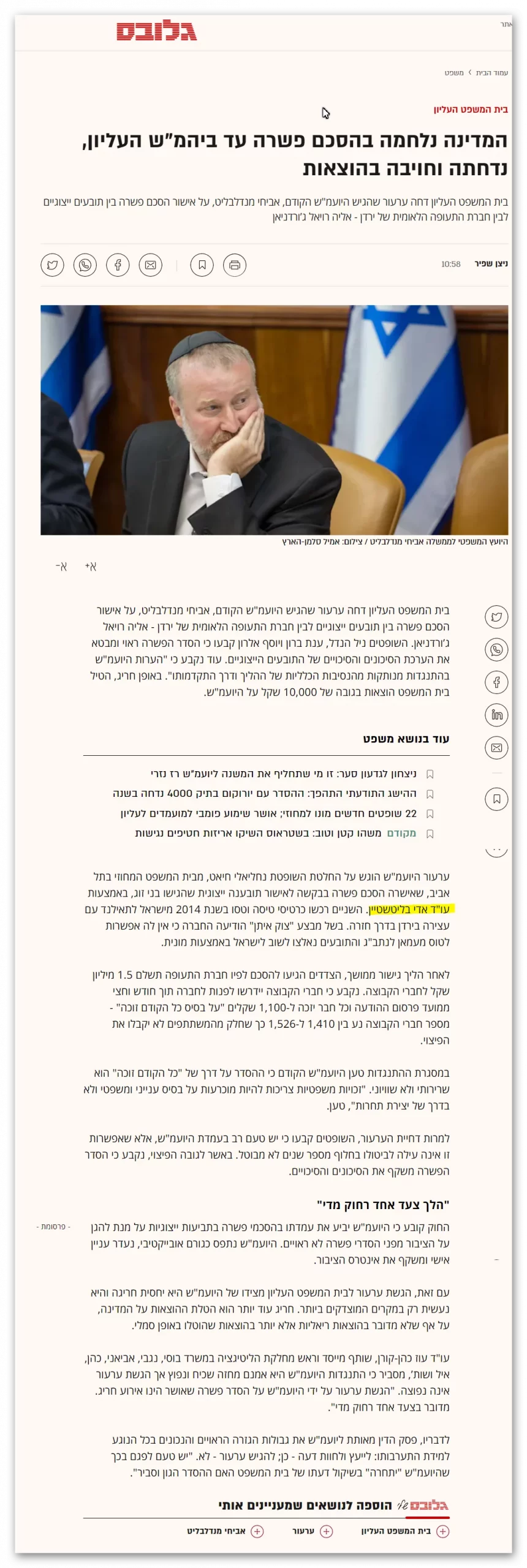
דוגמה לפסיקת בית המשפט העליון הקובעת מתי עילת תביעה התיישנה ניתן למצוא במסגרת ע"א 4354/22 פרופסור אלון טל ואח' נ' רותם אמפרט נגב בע"מ. במקרה זה נקבע, בין היתר, כך:
על פי הפסיקה, תקופת ההתיישנות מתחילה להימנות בהתקיים שלושה תנאים: התנאי הראשון הוא כי "נולדה עילת תביעה" (סעיף 6 לחוק), כלומר התגבשו כל העובדות הדרושות להוכחת התביעה; התנאי השני הוא שבידי התובע קיים "כוח תביעה", והכוונה היא לאפשרות ממשית להגיש תביעה ולזכות בסעד המבוקש על ידו; והתנאי השלישי הוא שלתובע נודע על דבר קיומה של עילת התביעה (סעיף 8 לחוק) (ראו מני רבים: ע"א 4627/22 מפרקי חברת אגרקסקו, חברה לייצוא חקלאי בע"מ (בפירוק) נ' קוסט פורר גבאי את קסירר (שותפות רשומה), פסקה 43 (7.6.2023); ע"א 595/22 בר עידן יצור ופיתוח בע"מ נ' מועצה אזורית שפיר, פסקה 13 (28.3.2023); ע"א 1442/13 זוארס נ' התעשיה הצבאית ישראל בע"מ, פסקה 11 (18.8.2016)).
In addition, Section 89(2) of the Torts Ordinance establishes a specific late disclosure rule regarding the element of damage in tortious torts:
89. לענין תקופת התיישנות בתובענות על עוולות – "היום שנולדה עילת התובענה" הוא אחד מאלה:
(2) Where the cause of action is damage caused by an act or omission – the day on which that damage occurred; if the damage was not discovered on the day it occurred – the day on which the damage was discovered, except that in this latter case the action shall be time-barred if it is not filed within ten years from the date on which the damage occurred.
The meaning of this provision is that ignorance of the damage does not extend the limitation period beyond ten years from the date the damage occurred. Thus, even if the damage is hidden and even if a period of seven years has not yet passed from the date the damage was discovered. (ע"א 6614/19 מדינת ישראל נ' ג'הסי, פסקה 16 (30.6.2021), להלן: עניין ג'הסי; ע"א 2919/07 מדינת ישראל – הוועדה לאנרגיה אטומית נ' גיא-ליפל, פסקה 34 (19.9.2010)).
…
The doctrine of continuing wrongdoing
The doctrine of continuing tort was established in the case law of this court. It was clarified as follows regarding the statute of limitations for this type of tort:
"במצב דברים שבו האירוע העוולתי, הכולל מרכיב נזק, הוא אירוע מתמשך המוליד עילות תובענה בזו אחר זו, הכלל הוא כי כל עוד נמשך המצב הפוגעני המתמשך, אין התובענה חסומה, ככל שהיא מתייחסת לעילות תביעה שקמו בזו אחר זו ואשר מבחינת מועד היווצרותן ועד הגשת התביעה הן מצויות עדיין בתוך תחומי תקופת ההתיישנות. כך הוא הדין, גם אם מעשי העוולה הראשונים מצויים כבר מחוץ לתקופת ההתיישנות". (ע"א 9413/03 אלנקווה נ' הוועדה המקומית לתכנון ולבניה ירושלים, פסקה 32 (22.6.2008), להלן: עניין אלנקווה).
עוד נקבע בנוגע להתיישנות של עוולה נמשכת, כי בנסיבות שבהן לא ניתן לערוך הפרדה בין הנזקים השונים שנגרמו על ידי כל אחת מעילות התביעה המתחדשות – טענת ההתיישנות תידחה ביחס לנזק בכללותו. הגיונה של קביעה זו נובע מכך "שככלל, על הנתבע מוטל הנטל להוכיח את טענת ההתיישנות המועלית על ידו, ונכללת בטענה זו גם טענת אפשרות ההפרדה בין הנזקים שהתיישנו לבין אלה שלא התיישנו. אם כשל בכך הנתבע, תידחה טענת ההתיישנות, והנזק כולו יהיה בר הוכחה" (עניין אלנקווה, פסקה 34).
The ruling on the subject further stated that a distinction must be made between continuing wrongdoing and continuing harm. The doctrine of continuing wrongdoing applies where there is a continuing act or omission – and not where there is a specific wrongful act accompanied by continuing harm (Jahsi case, paragraph 20). In other words, a one-time fault that has ended does not constitute a continuing wrongdoing – even if the harm caused by it continues or its scope is increasing.
Naturally, another condition for recognizing a continuing wrong lies in the wrongdoer's ability to cease committing the wrong and causing the damage:
"תנאי הכרחי לקיומה של עוולה נמשכת הוא שיש בכוחו הסביר של המעוול להפסיק את מחדלו (או מעשהו), ולהפסיק בכך את גרימת הנזק. שאם לא כן, מדובר במעשה או מחדל מקוריים שאינם ניתנים לשינוי, וממילא המעשה או המחדל הם חד-פעמים ואינם בגדר עוולה נמשכת" (ההדגשה במקור – ע'ב') (עניין ג'הסי, פסקה 23).
In the Jahsi case, it was clarified that the tort of negligence may also be considered a continuing tort, and several examples were even given of cases where this was determined in the ruling:
"כך למשל הוכרה רשלנות מתמשכת בגין חשיפה נמשכת של עובדת לחומרים מסוכנים שהזיקו לבריאותה (ע"א 590/67 קלינמן נ' ד"ר מירון חרושת כימית בע"מ, ו-3 אח', פ"ד כב(2) 929 (1968), להלן: עניין קלינמן). נקבע באותו עניין כי מעשיהם או מחדליהם של המשיבים, שהיה בהם משום רשלנות כלפי המערערת, נמשכו והלכו במשך תשע שנות עבודתה, בהן באה המערערת במגע יומיומי עם חומרים כימיים שהזיקו לבריאותה (שם, בעמ' 935-933. וראו גם: זלמן יהודאי, דיני התיישנות בישראל, כרך א', עמ' 158 (1991)). ברוח זו, הוכרה גם חשיפה נמשכת לאבק שגרמה לפי הנטען לסתימת ריאותיו של עובד כעוולה נמשכת (ע"א 702/86 איטונג בטרום (אינוונג) בע"מ נ' בן הרוש, פ"ד מד(1) 160 (1989). והשוו: Clarkson v. Modern Foundries Ltd. (1957) 1 WLR 1210).
גם רשלנות מתמשכת מצד בנק, אשר סירב להסיר משכנתא בגין הלוואה שהמשיבים לא נטלו מעולם, 'הגם שניתנו פסקי דין ברורים לטובת המשיבים בעניין זה' הוכרה כעוולה נמשכת (עניין גולדסיל, בפסקה 26). כך גם רשלנות מתמשכת במחדל מצד רשויות התכנון בסירובן למתן היתר בנייה (ע"א 3139/05 כלפון נווה ארזים בע"מ נ' הוועדה המקומית לתכנון ובנייה, בפסקה 32 (31.1.2008))" (שם, פסקה 21).
For the sake of order, it should also be noted that two categories of continuing tort can be distinguished: one includes a continuing tort that caused one damage; the other includes a continuing tort that gives rise to repeated causes of action and renewed damage (hereinafter: a continuing tort). The distinction between the two categories is not always simple; and in any case, its main issue is that with regard to a continuing tort, the statute of limitations must be examined in relation to each cause of action separately – with those that are outside the statute of limitations being dismissed.
ואולם גם כאשר עילות התביעה ניתנות לבחינה נפרדת, ישנם מצבים שבהם הנזק אינו ניתן לחלוקה – שאז אם לא יעלה בידי הנתבע להוכיח את חלק הנזק שנגרם בתקופה שלא התיישנה, ניתן יהיה לתבוע בגין הנזק כולו (לרבות זה שנוצר בתקופת ההתיישנות) (ע"א 9292/07 חברות שדמות הדרום בע"מ נ' ועדה מקומית לתכנון ובניה "שמעונים", פסקה 11 (6.1.2010); ע"א 1726/21 בכרי נ' מגנאג'י, פסקאות 48-45 לפסק דינו של השופט י' עמית (בדעת מיעוט אך לא בעניין זה) (23.11.2022), להלן: עניין בכרי).
…
In general, the case law recognized two main parameters intended to distinguish between a specific wrong and an ongoing wrong, which are repetition and continuity:
"תופעה היא 'נמשכת' אם מאפייניה המהותיים חוזרים על עצמם ברציפות. מעשה או מחדל (אשם) ייחשב נמשך אם וכל עוד הוא מקיים את תכונות החזרה (זהות מהותית בין מאפייני האשם שמתרחשים ביחידת זמן מוקדמת לבין מאפייני האשם שמתרחשים ביחידת זמן מאוחרת לה) והרציפות (גילויי האשם צריכים להיות תכופים דיים כדי להיחשב לאשם אחד ולא לאשמים נפרדים). השאלה אימתי מתקיימים תנאים אלה – חזרה ורציפות – היא שאלה נורמטיבית הנתונה לשיקול דעת בית המשפט כתלות בעובדות המקרה" (ההדגשות במקור – ע'ב') (המשנה לנשיאה א' רובינשטיין ברע"א 4892/15 המועצה הדתית עכו נ' עזבון חכון, פסקה ז (16.8.2015), שם הוא מצטט מתוך טל חבקין התיישנות 453 (מהדורה שניה, 2021)).
Following on from these remarks, it should be explained that the question of whether an act or omission constitutes a specific or continuing wrong is not a purely factual question – but also a legal question within which it is possible and even appropriate to consider policy and other normative considerations (see and compare the words of Justice A. Stein in the Bakri matter, paragraphs 22-24).

In conclusion
If a cause of action has become time-barred, this can prevent a person from having the right to file a claim and recover for their damages. The period during which a claim becomes time-barred varies and depends on the case. For example; a claim that does not involve real estate will usually become time-barred after 7 years from the date the relevant details were discovered.
On the other hand, a claim that deals with real estate will become statute-barred after 15 and sometimes even 25 years have passed from the date of discovery of the facts relevant to filing the claim.
It is very important to argue that a cause of action has become time-barred at the first opportunity, otherwise the court may allow the lawsuit to proceed because the defendant did not assert his rights.
לLegal claim There are many relevant legal provisions and rulings that expand or narrow the cases in which it can be argued that a claim has become time-barred. It is very important to know the relevant legal provisions in order to make proper use of claims in which the cause of action has become time-barred.
Frequently Asked Questions
-
Can the statute of limitations prevent a lawsuit from being filed?
The statute of limitations cannot prevent an actual lawsuit from being filed (the secretariat will accept the lawsuit in any case), but raising this claim at the first opportunity can lead to the lawsuit being dismissed outright.
If the defendant does not assert this claim, the court may hear the claim. -
When should one claim that the claim has become time-barred?
This claim should be made at the first opportunity. Sometimes the first opportunity is even before filing. Defense.
-
How long does it take for a claim to become statute-barred?
In most cases, which do not involve real estate, a claim becomes statute-barred after seven years. You need to read the law carefully because there are exceptions.
-
Can it be argued that a small claim has become time-barred?
It can be argued that even a small claim has become time-barred.