What is a court action?
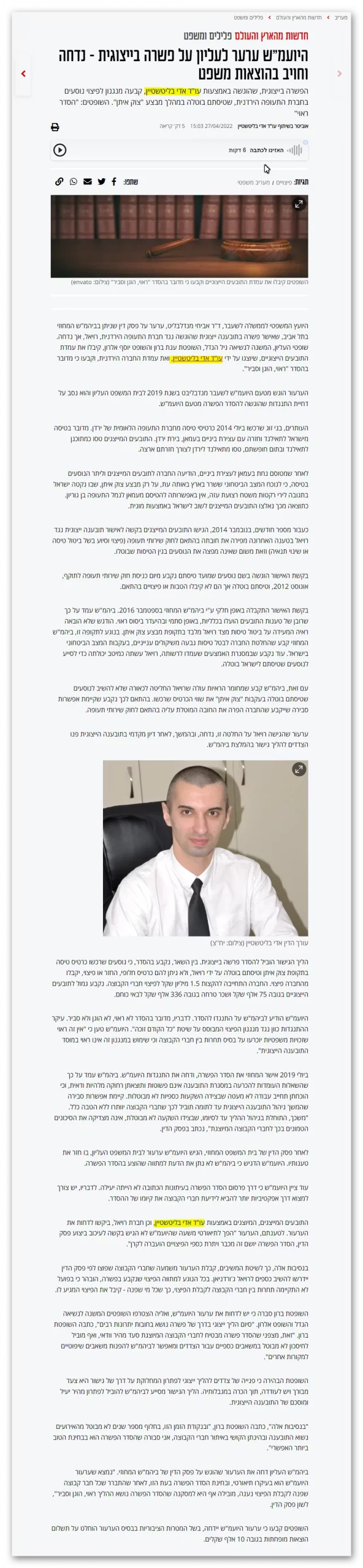
A legal claim is a legal claim that is usually raised by the defendant, and it means that legal proceedings have already taken place on the same matter by the parties to the current lawsuit (or their successors), the issue has been examined by the court on its merits, and a decision has been made on that issue.
The purpose of the rule of law is not to harass the litigant (and the court) in a matter that has already been decided in the past. If a litigant is not satisfied with the result reached by the judge, instead of filing another lawsuit, he must act to Filing an appeal against a judgment.
It is very important to know that a claim regarding a court action must be raised at the first opportunity. If the claim is not raised at the first opportunity, the court may hear the same matter again. This usually results from the court simply being unaware of previous proceedings that took place between the same litigants if they do not disclose it in the context of Claim or Defense.
If the court is aware of previous proceedings between the parties on the same issue, it may raise the issue of res judicata even if the parties do not raise it on their own initiative.

The judge's authority regarding the claim of a judicial act
The judge's authority regarding a claim of legal action is set forth in Regulation 43. Civil Procedure Regulations, which states as follows:
Rejection of a claim in special cases
43. The court may Reject a claim whenever Due to the existence of a court case, Obsolescence Or for any other reason, on which he believes it is appropriate and proper to dismiss the claim.
That is, the court may (but is not required to) Reject a claim (so that it cannot be resubmitted) if a claim arises regarding a court action.
דחיית התביעה משמעות הדבר שהשופט "יפסול" את התביעה, ולמעשה In light of the claim being raised, the judge will not examine the claims on their merits at all.The dismissal can also be carried out before filing a defense, if the defendant files a motion to dismiss outright and succeeds in convincing the court of his arguments.
Supreme Court ruling on the matter of court action
The issue of judicial act has been examined extensively in Supreme Court rulings, which have determined, for example, why this is a substantive matter and in which cases the claim should be accepted.
לדוגמה במסגרת בע"מ 7367/22 פלונית נ' פלונית, שם נקבע בין היתר, כך:
לצד האמור, מובן כי ישנם הבדלים לא מבוטלים בין מחיקה מוקדמת של כתב תביעה, לבין מתן פסק דין בשלב קדם המשפט. הבדל מרכזי בין אלה, עניינו בהשלכות המשפטיות הנובעות מן השימוש בכל אחת מהסמכויות הנ"ל – The deletion of a claim, when it is found that it does not disclose a cause of action, or for any other reason, does not create a judicial act, and therefore, a claimant whose claim has been deleted may amend and resubmit it. (Regulation 41(b) of the new regulations).
In contrast, the issuance of a judgment at the pre-trial stage means that a judgment has been issued for all intents and purposes, which creates a final judgment in all matters relating to these claims. (ע"א 246/66 קלוז'נר נ' שמעוני, פ"ד כב(2) 561, 583 (1968)). אמנם, גם למחיקת כתב תביעה יש השלכה משמעותית על התובע (רוזן-צבי, עמודים 251-250), אולם ההבדל הנזכר, מטבע הדברים, הופך את ההכרעה בדבר מתן פסק דין בשלב קדם המשפט, לבעלת משמעות מרחיקת לכת בהרבה, בהשוואה להשלכות הנובעות ממחיקת כתב תביעה.
In this sense, the authority to issue a judgment at the preliminary stage is similar to the court's authority to prematurely dismiss a claim, since the latter also creates a judicial act. (Goren, pages 306-307). Indeed, the absence of a cause of action is not included – certainly not explicitly – among the grounds by virtue of which a claim may be dismissed outright (see: Regulation 43 of the new regulations; and previously: Regulation 101 of the previous regulations).
בעניין ע"א 642/21 פרידה ורקשטל נ' בנק לאומי ישראל, קבע בית המשפט העליון, בין היתר, כך:
אחד הכללים הנובעים מדוקטרינת מעשה בית דין הוא, שבעל דין לא יוטרד פעם נוספת באותו עניין עצמו (נינה זלצמן מעשה בית דין בהליך אזרחי, עמ' 12 ואילך (התשנ"א)). עקרון מעשה בית דין נועד, בין היתר, לתמרץ את התובע לרכז את תביעותיו, ולכן חל השתק עילה מקום בו התובע יכול היה להגיש תביעתו במסגרת תביעה קודמת.
בבסיסו של כלל זה עומד אינטרס היעילות וסופיות הדיון "שלולא מוראה של דוקטרינה איש את רעהו רדפו במעגל אין-סופי" (ע"א 4012/96 שחף הובלות והשקעות (1976) בע"מ נ' הבנק הבינלאומי הראשון לישראל בע"מ, פ"ד נה(1) 492, 506 (1999). "כללי מעשה-בית-דין מבוססים על הרעיון כי מסגרת סדרי הדין ששיטת המשפט מספקת לבעלי-הדין מאפשרת להם בדרך-כלל למצות את מלוא טענותיהם ומלוא סעדיהם בהליך דיוני אחד" (ע"א 1650/00 זיסר נ' משרד הבינוי והשיכון, פ"ד נז(5) 166, 183 (2003); ע"א 9656/08 מדינת ישראל נ' סעידי, פסקה 18 [פורסם בנבו] (15.12.2011)).
In order for a litigant not to be repeatedly harassed for the same matter, the plaintiff is required to consolidate his claim against the defendant, otherwise, and in the absence of permission to divide remedies, he has exhausted his claim.. פסקי הדין המנחים בנושא זה הם ע"א 246/66 קלוז'נר נ' שמעוני, פ"ד כב(2) 561 (1968) ו-ע"א 718/75 עמרם נ' סקורניק, פ"ד לא(1) 29 (1976), שם נקבע כי יש להשתיק בעל דין המבקש להטריד את יריבו בעניין בו נפסק במשפט הראשון.
גם יסודות טענת מעשה בית דין נבחנו על ידי בית המשפט העליון, לדוגמה במסגרת רע"א 7202/18 יוסף קוזליק נ' בנק דיסקונט ואח', שם נקבע, בין היתר, כך:
The rule of res judicata is based on the idea that a judgment given at the conclusion of any judicial proceeding constitutes the end of the litigation between those parties or their successors; and it establishes a judicial barrier, a silence, on any matter or question decided in the judgment. (For more on the subject, see: Nina Salzman, Court Action in Civil Procedure (1991) (hereinafter: Salzman); Issachar Rosen-Zvi, Civil Procedure Chapter 8 (2015) (hereinafter: Rosen-Zvi)).
כידוע, לכלל זה שני ראשים – "השתק עילה" שמושתת על עיקרון מיצוי עילת התביעה ומכוחו נמנעות התדיינויות נוספות ב"עילה" שהוכרעה זה מכבר; ו"השתק פלוגתא" שמונע התדיינות חוזרת במחלוקות עובדתיות ומשפטיות שנידונו לגופן והוכרעו בהליך הקודם, וזאת גם כאשר ההתדיינות המאוחרת היא בעילת תביעה שונה (ע"א 246/66 קלוז'נר נ' שמעוני, פ"ד כב(2) 561, 584-583 (1968); וראו למשל: ע"א 1691/11 בנק לאומי למשכנתאות בע"מ נ' צוברי, פסקאות 22 ו-26 (15.12.2015); רע"א 5138/18 עוואד נ' עו"ד נשר, פסקה 12 (16.10.2018))….
In general, Mute reason Applies only to the plaintiff and not to the defendant, as the plaintiff is expected not to split the cause of action into several claims; while the defendant is not obligated to raise all the claims that he has in connection with the subject of the claim, nor is he required to file a counterclaim (Saltzman, at pp. 42-46; Rosen-Zvi, at p. 551). In this sense, and unlike the District Court's ruling, not in every case in which a claim is received against a defendant will this constitute a ground for estoppel against him.
As can be seen, the rule regarding the court's action has two elements: the reason for the action and the reason for the action. These elements also have subtests that must be recognized.
A court action of the type that silences a person.
In the matter Silence the mob בית המשפט העליון קבע במסגרת רע"א 5138/18 ג'אזי עוואד נ' עו"ד נפתלי נשר, בין היתר, כך:
The rules of res judicata are based on the idea of finality. They are based on the concept that after a matter has been discussed by the competent legal bodies, with each party given their day in court, a legally accepted final judicial decision is binding, and by virtue of it a judicial barrier is created that prevents repeated legal proceedings in the same matter. As is known, the rules of res judicata have two heads: estoppel of cause and estoppel of consequence. Estoppel of cause prevents further litigation in claims that were discussed in a proceeding that was decided; estoppel of consequence prevents relitigation in factual and legal disputes that were discussed on their merits and a positive finding was made in the previous proceeding (for a comprehensive discussion of the rules of res judicata, see: Nina Salzman, Estoppel ofה בית דין בהליך אזרחי (1991) (להלן: "זלצמן"); יששכר רוזן-צבי ההליך האזרחי 678-485 (2015) (להלן: "רוזן-צבי")).
…
מעשה בית דין מסוג השתק פלוגתא מחייב קיומם של ארבעה תנאים: (1) שהפלוגתא העולה בכל אחת מן ההתדיינויות, על רכיביה העובדתיים והמשפטיים, תהא זהה; (2) שבעל הדין שנגדו מועלית טענת ההשתק בהתדיינות השנייה "זכה ליומו בבית המשפט" ביחס לאותה פלוגתא; (3) שההתדיינות הסתיימה בהכרעה, מפורשת או מכללא, של בית המשפט באותה פלוגתא בקביעת ממצא פוזיטיבי, להבדיל מממצא של חוסר הוכחה; (4) שההכרעה הייתה חיונית לצורך פסק הדין הסופי שניתן בתובענה הראשונה (להבדיל מהכרעה שולית בלתי נחוצה לביסוסו של פסק הדין בתובענה) (ראו זלצמן, עמוד 141; רוזן-צבי, עמוד 539).
In conclusion
This court's act Legal claim Important because it may prevent further (and unnecessary) litigation between the same litigants on an issue that has already been examined and decided by the court.
The court may dismiss the lawsuit at any stage if one of the parties raises the claim.
This legal claim has a number of conditions and foundations, such as the suppression of cause and the suppression of the cause.
It is highly recommended to use the services of Experienced lawyer In order to deal with this claim or to examine whether it applies to your case.